How to Choose the Right Curtain Fabric for a Cozy and Stylish Home
This post may contain affiliate links · This blog generates income via ads

Choosing the right curtain fabric can completely change how a room looks and feels. The best fabric depends on your goals, whether you want more privacy, better light control, a cozy texture, or a polished designer look without spending a fortune.

I still remember the first time I bought curtains for my first rental home years ago. I picked a fabric that looked beautiful in the package, but once I hung them up, they felt stiff, flat, and completely wrong for the space. The room suddenly looked cheap instead of cozy.
Since then, I’ve worked on countless room makeovers, styled homes for clients, and tested just about every curtain fabric you can imagine!! One thing I’ve learned is this: curtain fabric matters far more than most people realize.
The right curtains can soften a room, improve your quality of life (seriously – think about your bedroom!), and instantly create that warm designer look people love. The wrong fabric can make even expensive curtains feel cheap or awkward.
The good news is that choosing curtain fabric does not have to feel overwhelming. Once you understand a few simple basics about texture, weight, and function, it becomes much easier to find curtains that work beautifully in your home!
In this guide, I’ll walk you through:
- the most popular curtain fabrics
- which fabrics work best in each room
- how to choose the right weight and texture
- budget-friendly tips I use as a home stylist to make curtains look more expensive
Quick Overview
Time: About 20 minutes to plan and compare fabrics
Cost: Budget-friendly to luxury options available
Skill level: Beginner
Tools: Fabric swatches, measuring tape, natural light
Materials and Tools to Help You Choose
You do not need many tools for this process, but a few simple things can help you make a much better decision.
Whenever I help clients choose curtains, I always recommend testing fabrics at home instead of relying on online photos alone. Lighting changes everything!!
Materials and tools:
- Fabric swatches (or curtains you can buy and return if needed) from home stores or online retailers
- Measuring tape
- Notebook or phone for photos
- Curtain rod measurements
- Paint or flooring samples
- Natural daylight
You can find affordable curtains and sometimes samples at stores like IKEA, Walmart, HomeSense, thrift stores, fabric shops, and Amazon.
Step-by-Step Guide to Choosing the Right Curtain Fabric
Step 1: Decide What You Want the Curtains to Do
Before choosing a fabric, think about the purpose of your curtains.
This is actually the first thing I ask clients during home styling consultations because beautiful curtains still need to function well for everyday life.
Ask yourself:
- Do you need privacy?
- Do you want blackout curtains for sleep?
- Are you trying to soften the room?
- Do you want a light and airy feel?
- Is insulation important during winter?
For example:
- Bedrooms usually need thicker or blackout fabrics
- Living rooms usually work well with linen or cotton blends
- Dining rooms can handle more decorative fabrics like velvet
Starting with function helps narrow your choices quickly and prevents expensive mistakes later.
Step 2: Understand the Most Popular Curtain Fabrics
Here are some of the most common curtain materials and where they work best.
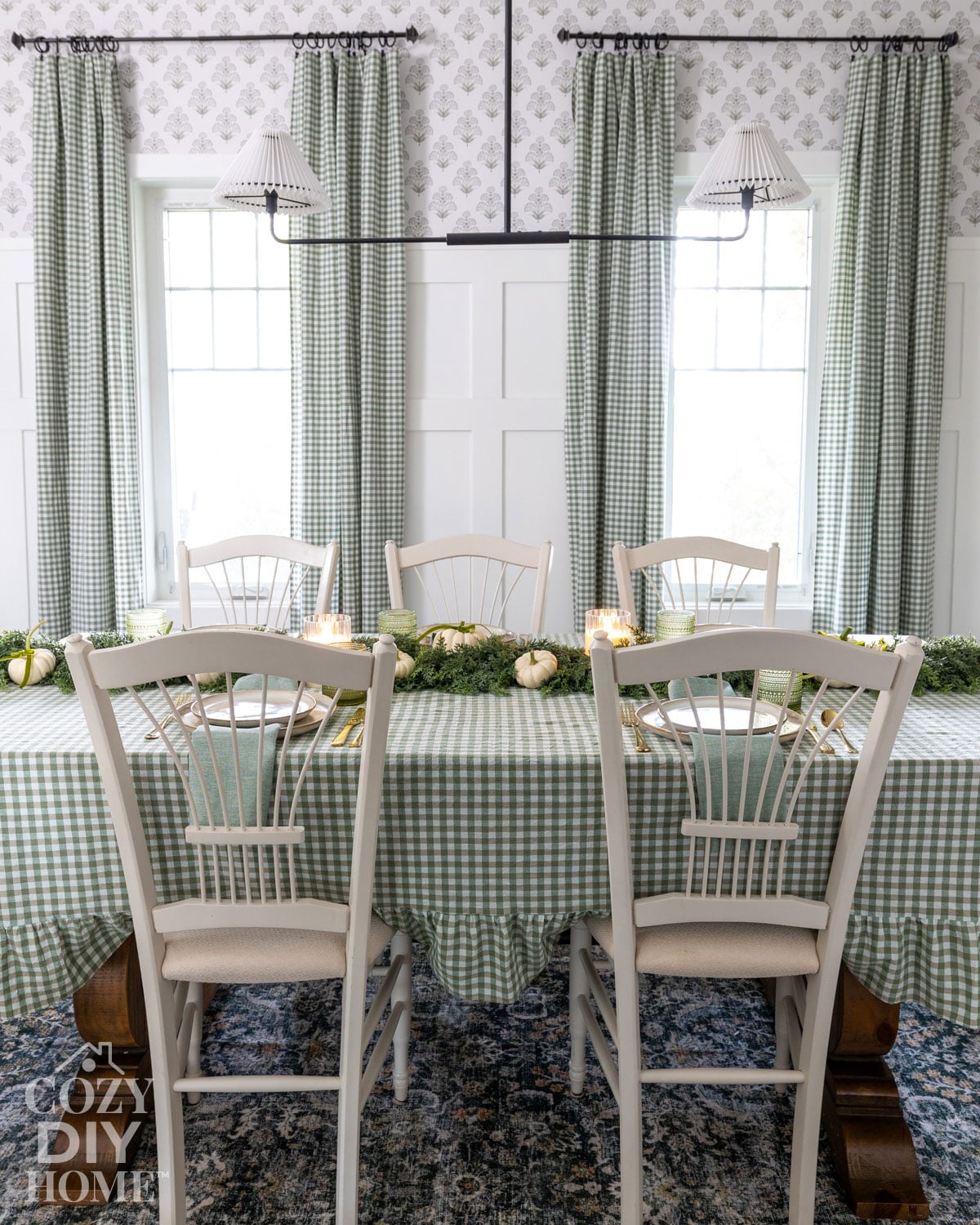
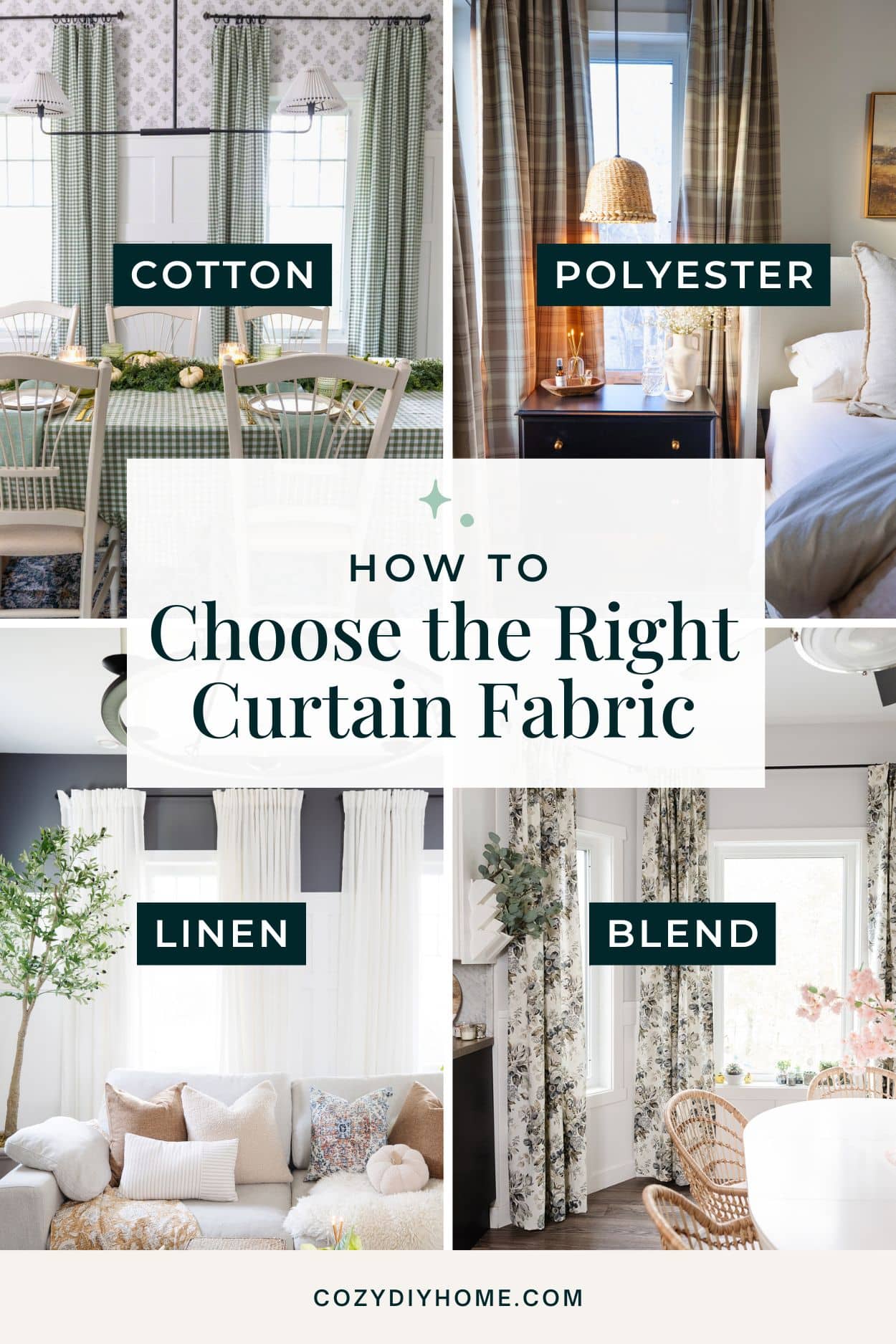
Cotton
Cotton is one of the easiest and most versatile curtain fabrics.
I use cotton blends all the time in cozy home styling because they work with almost every decorating style and usually drape beautifully without feeling overly formal.
Why people love it:
- soft and casual
- easy to clean
- works with many decorating styles
- affordable
Best for:
- living rooms
- bedrooms
- farmhouse style homes
- casual spaces
A cotton blend often hangs better than 100% cotton and wrinkles less.

Linen
Linen curtains create a relaxed, airy, designer-inspired look.
This is probably the fabric I recommend most often for cozy neutral homes because it adds instant texture and softness.
Benefits:
- beautiful texture
- lets in soft natural light
- perfect for cozy neutral homes
Things to know:
- wrinkles easily
- usually more expensive
- may need lining for privacy
Linen works especially well in modern farmhouse, coastal, and minimalist spaces.
Velvet
Velvet curtains instantly make a room feel rich and cozy.
I especially love velvet during fall and winter because it makes a space feel warm, layered, and luxurious without needing a full room makeover.
Benefits:
- blocks light well
- adds warmth
- helps reduce outside noise
Best for:
- bedrooms
- formal dining rooms
- cozy reading spaces
Velvet is heavier, so make sure your curtain rod is sturdy enough.

Sheer Fabric
Sheer curtains are lightweight and allow lots of natural light.
One of my favorite designer tricks is layering sheer curtains underneath thicker panels. It creates a soft, high-end look while still giving you flexibility with privacy and light.
Benefits:
- brightens a room
- softens windows
- affordable layering option
Best for:
- layering with blackout panels
- living rooms
- sunrooms
They provide minimal privacy on their own.
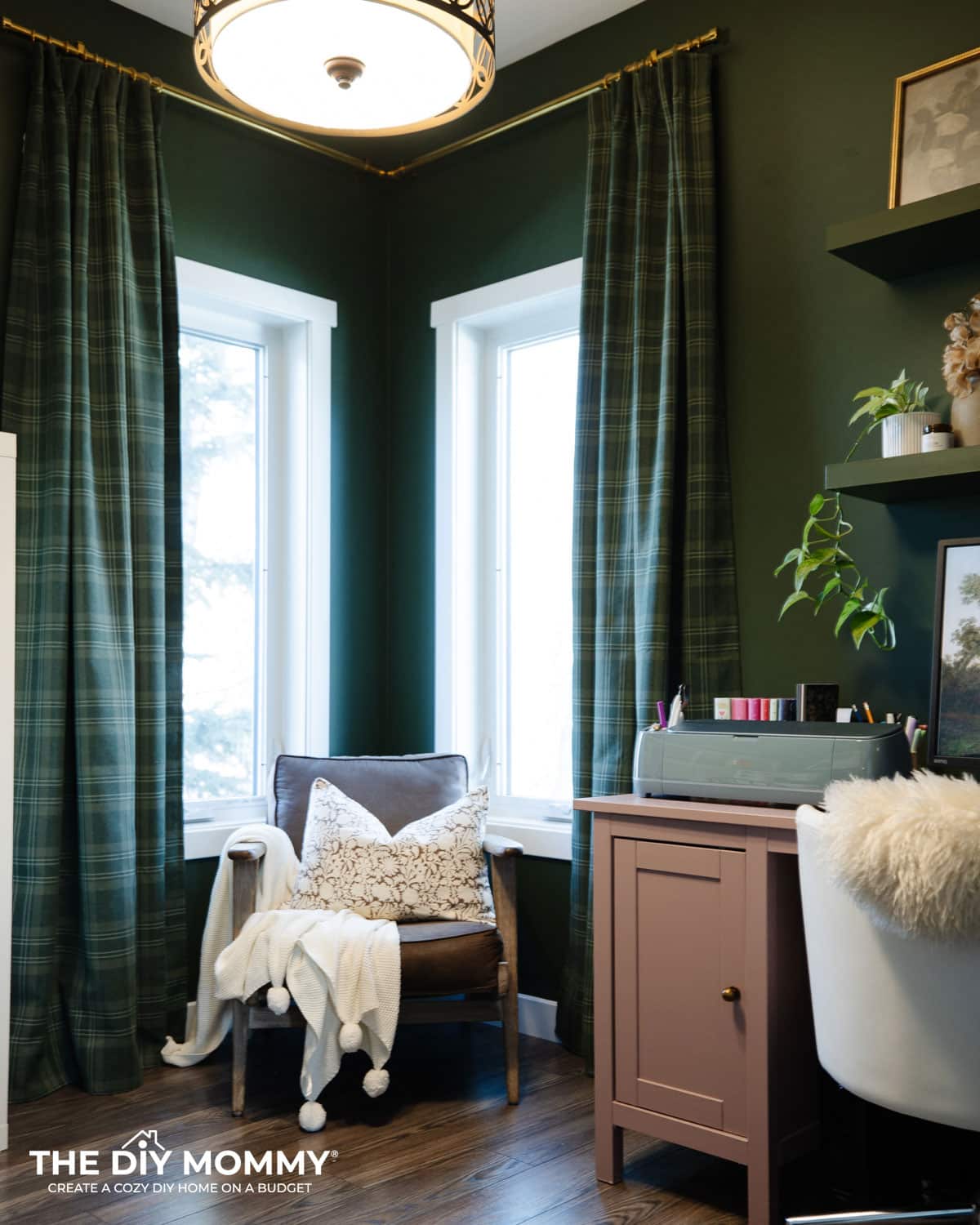
Polyester
Polyester is one of the most budget-friendly curtain fabrics.
Honestly, modern polyester curtains have improved so much over the years. Some of the higher-quality options now look surprisingly similar to a natural fiber at a fraction of the price.
Benefits:
- wrinkle resistant
- easy to clean
- widely available
- durable
This is a great option for beginners decorating on a budget.
According to IKEA, polyester blends are also known for holding colour and shape well over time.
Step 3: Choose the Right Fabric Weight
Fabric weight affects how curtains hang and function.
One thing I’ve learned after styling many homes is that heavier fabrics almost always look more expensive because they drape better and create fuller folds.
Lightweight Fabrics
Examples:
- sheer panels
- lightweight cotton
- linen blends
Best for:
- airy spaces
- bright rooms
- casual styles
These fabrics allow more sunlight into the room.
Medium-Weight Fabrics
Examples:
- cotton blends
- textured polyester
- lined linen
Best for:
- everyday use
- balanced privacy and light
This is often the safest choice for most homes.
Heavyweight Fabrics
Examples:
- velvet
- blackout curtains
- thick woven fabrics
Best for:
- bedrooms
- cold climates
- media rooms
Heavier curtains also help rooms feel warmer and cozier.
Step 4: Test the Fabric in Natural Light
One of the biggest mistakes people make is choosing curtain fabric under store lighting.
I always tell homeowners to hold fabric samples near their windows at different times of day. Morning light and evening light can completely change how a fabric looks.
Natural light helps you see:
- true fabric color
- texture
- transparency
- how much light passes through
A fabric that looks cream in the store may appear yellow in your room.

Step 5: Think About Maintenance
Some fabrics require much more care than others.
As someone who styles family-friendly homes often, I usually encourage clients with pets or children to prioritize washable and durable fabrics first.
Easy-care options:
- polyester
- cotton blends
- machine washable curtains
Higher-maintenance fabrics:
- silk
- velvet
- unlined linen
If you have kids, pets, or busy spaces, washable fabrics are usually the better choice!
Tips for the Best Results
Here are a few practical tips that can make your curtains look much more expensive.
These are the same styling tricks I use when decorating client homes on a budget.
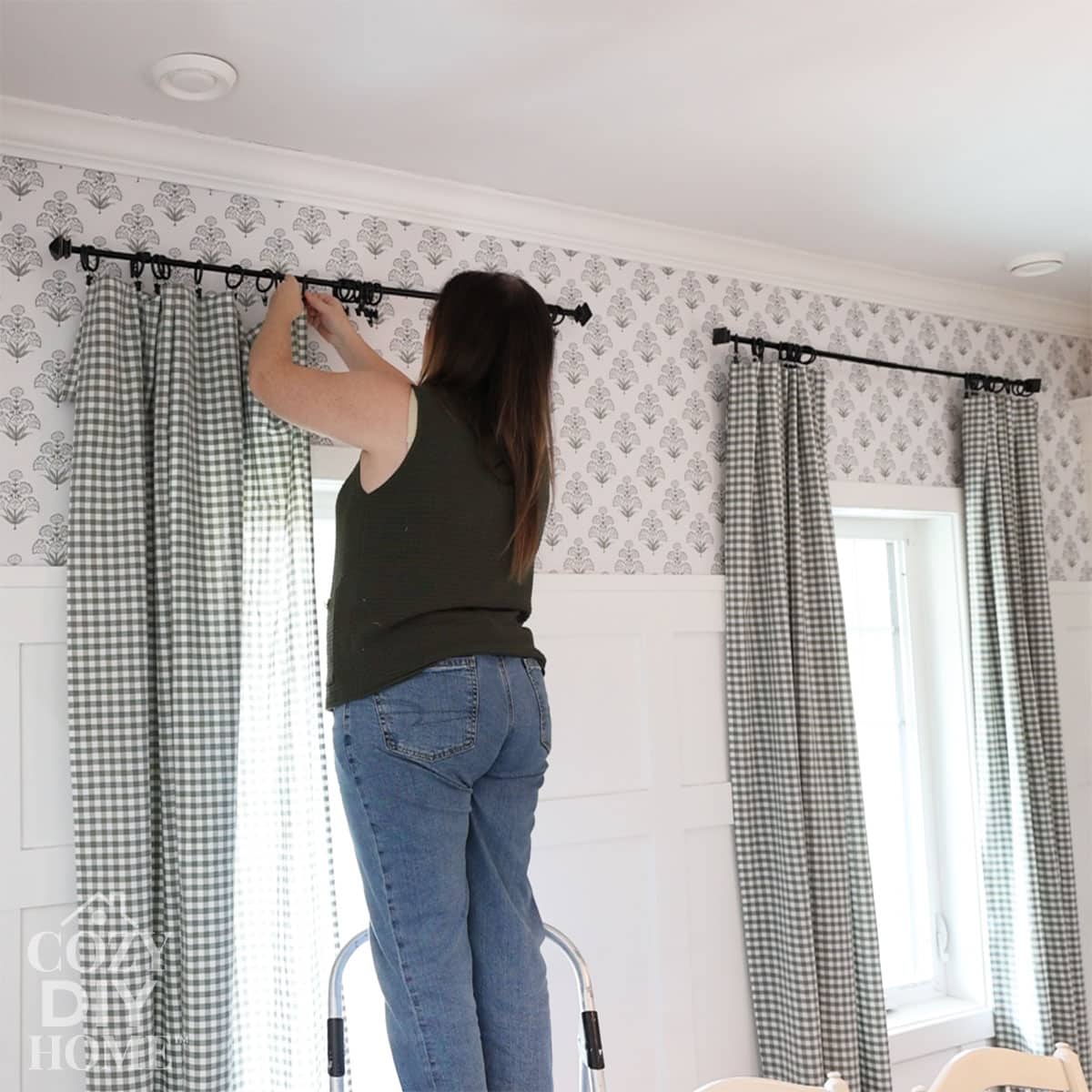
Hang Curtains Higher and Wider
Mount curtain rods higher above the window to create the illusion of taller ceilings.
A common designer trick is placing rods 4-8 inches above the window frame.
I also recommend extending the rod wider than the window so the curtains frame the window instead of blocking natural light.
You’ll want to read this blog post for more tips on how to hang curtains: How to Measure for Curtains Correctly (So They Look Full and Expensive)
Use Lined Curtains
Lining helps curtains:
- hang better
- block more light
- look fuller
- last longer
Even inexpensive curtains can look high-end with proper lining.
Order Fabric Swatches First
This small step can save money and prevent returns.
I rarely order curtains online without testing swatches first because colour tones can vary dramatically from screen to screen.
Avoid Curtains That Are Too Thin
Very thin curtains can sometimes look flat or cheap unless they are intentionally sheer.
Medium-weight fabrics usually create the most polished look.

Styling Ideas for Different Rooms
Living Room
Try soft linen or cotton blend curtains in warm neutral tones for a cozy and inviting look.
In many of the homes I style, warm ivory and oatmeal curtains instantly make a space feel brighter while still keeping that cozy layered look.
Popular colours:
- ivory
- oatmeal
- soft taupe
- warm gray

Bedroom
Use blackout-lined curtains for better sleep and extra coziness.
Velvet or thicker woven polyester fabrics can also make the room feel quieter and warmer.
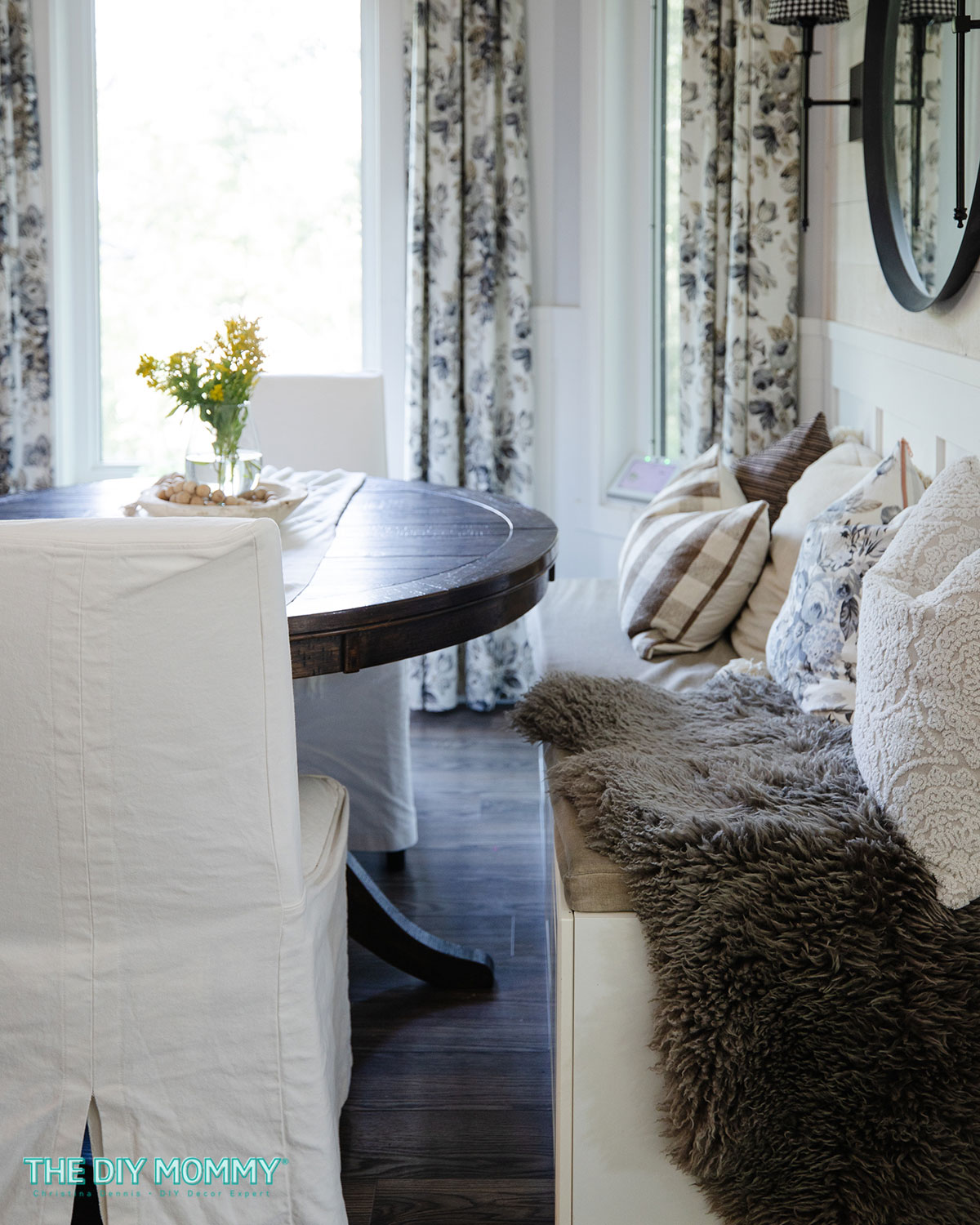
Dining Room
This is a great place to use richer textures like velvet or pleated curtains for a more elegant feel.

Small Rooms
Lighter fabrics and colors can help small spaces feel larger and brighter.
Floor-length curtains also create the illusion of height.
Frequently Asked Questions
Cotton blends are one of the best all-around choices because they are affordable, versatile, and easy to maintain.
Yes, if you love a soft and airy designer look. Linen adds beautiful texture, but it may require more maintenance.
Blackout-lined curtains and velvet fabrics usually block the most light.
Polyester and cotton blends are typically the easiest to clean and maintain.
In most cases, yes. Floor-length curtains usually look more polished and cozy than short curtains.
Related Projects and Decorating Ideas
If you enjoyed this guide, you might also like:
- How to Make Curtains from Bed Sheets (An Easy Budget-Friendly DIY)
- How to Make Store-Bought Curtains Look Custom (Without Spending a Fortune)
- How to Measure for Curtains Correctly (So They Look Full and Expensive)
- How to Sew DIY Curtains at Home (Easy-to-follow Steps)
- 10 Curtain Mistakes That Make Your Home Look Cheap (And How To Fix Them!)
Choosing the right curtain fabric does not have to feel confusing once you know what to look for. The best fabric for your home depends on your style, budget, lighting needs, and how you want the room to feel.
After years of styling homes and helping homeowners create cozy spaces on a budget, I truly believe curtains are one of the most powerful changes you can make in a room! They add softness, warmth, texture, and personality in a way very few decor pieces can.
Whether you choose airy linen, cozy velvet, practical polyester, or a simple cotton blend, the right curtains can completely transform your space and make it feel warmer and more finished.
Start with one room, order a few fabric swatches, and trust your eye. Creating a cozy home does not require perfection or a huge budget. Small changes often make the biggest difference.
Have a favorite curtain fabric or decorating tip? Share it in the comments and inspire other readers! Or share our favourite curtains on social and tag me, @cozydiyhome!
Pin me: