
14-Day Home Organization Challenge + Printable Declutter Checklist
This post may contain affiliate links · This blog generates income via ads

Welcome to the Cozy DIY Home 14-Day Home Organization Challenge! If you’re ready to declutter and transform your living spaces, you’re in the right place. In this comprehensive guide, I’ll tackle each trouble spot in your home, providing practical tips and tricks to create a more organized and visually appealing space. Plus, I’ve got a special treat for you: a Printable Declutter Checklist to guide you through the process. Let’s get started!
I wouldn’t call myself the most naturally organized person in the world, that’s for sure! I’d much rather decorate my home than declutter and organize it. So for me, it takes concentrated challenges like this one to get me to really tackle my home. After I do this 14-day home organization challenge using my printable declutter checklist, my house feels SO much more organized and free of junk! I hope this challenge helps you, too. I’ve included ways to conquer the biggest trouble spots in my home, because I know they’re likely problem areas for most of us!
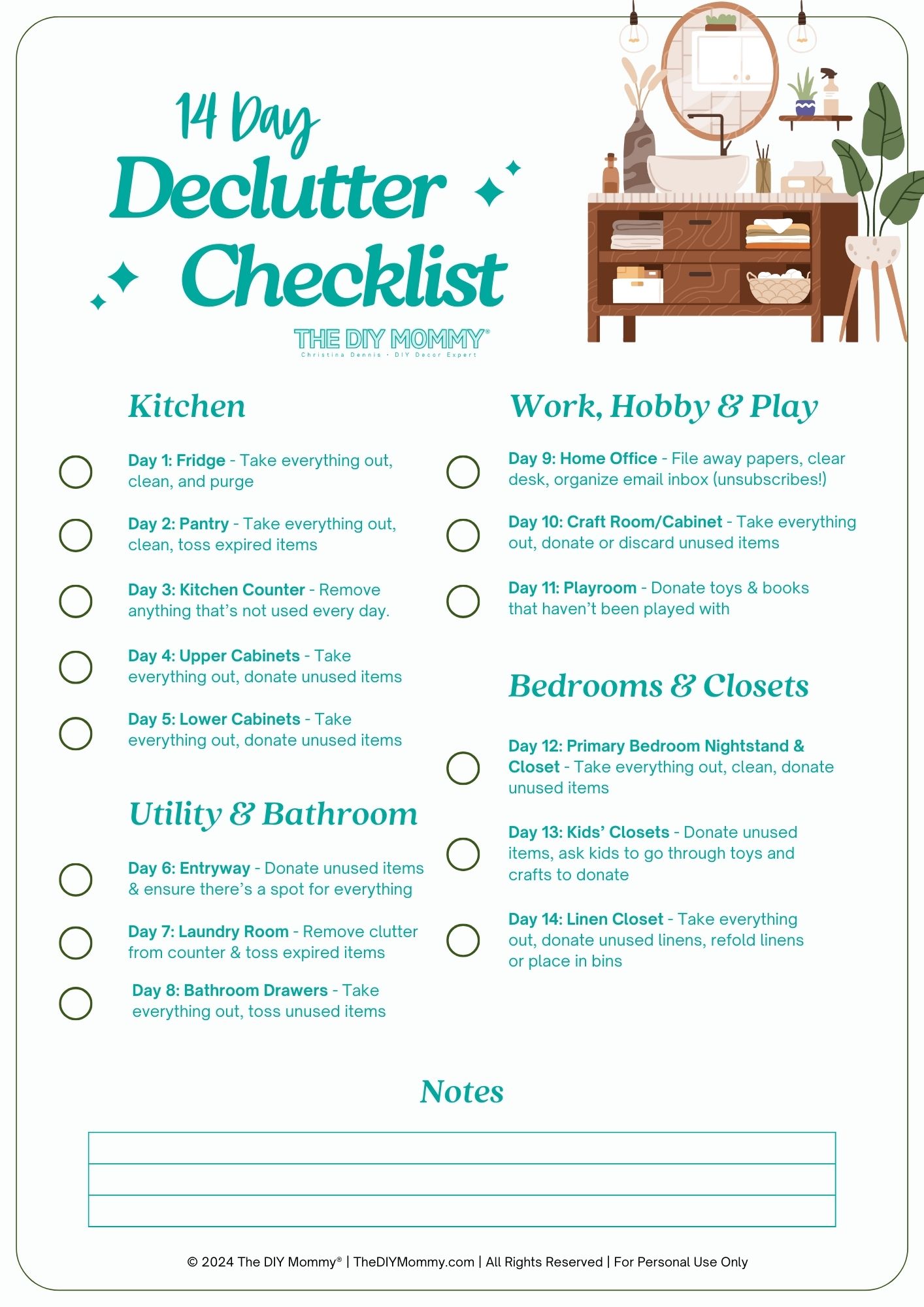
Click here to get started by downloading my Free Printable Declutter Checklist!
You can also click on the image below to open up my free printable decluttering checklist PDF. Print it out on your home computer and use it as a guide as you go through your daily organization and decluttering process!
Day 1: Fridge & Freezer—The Heart of the Home
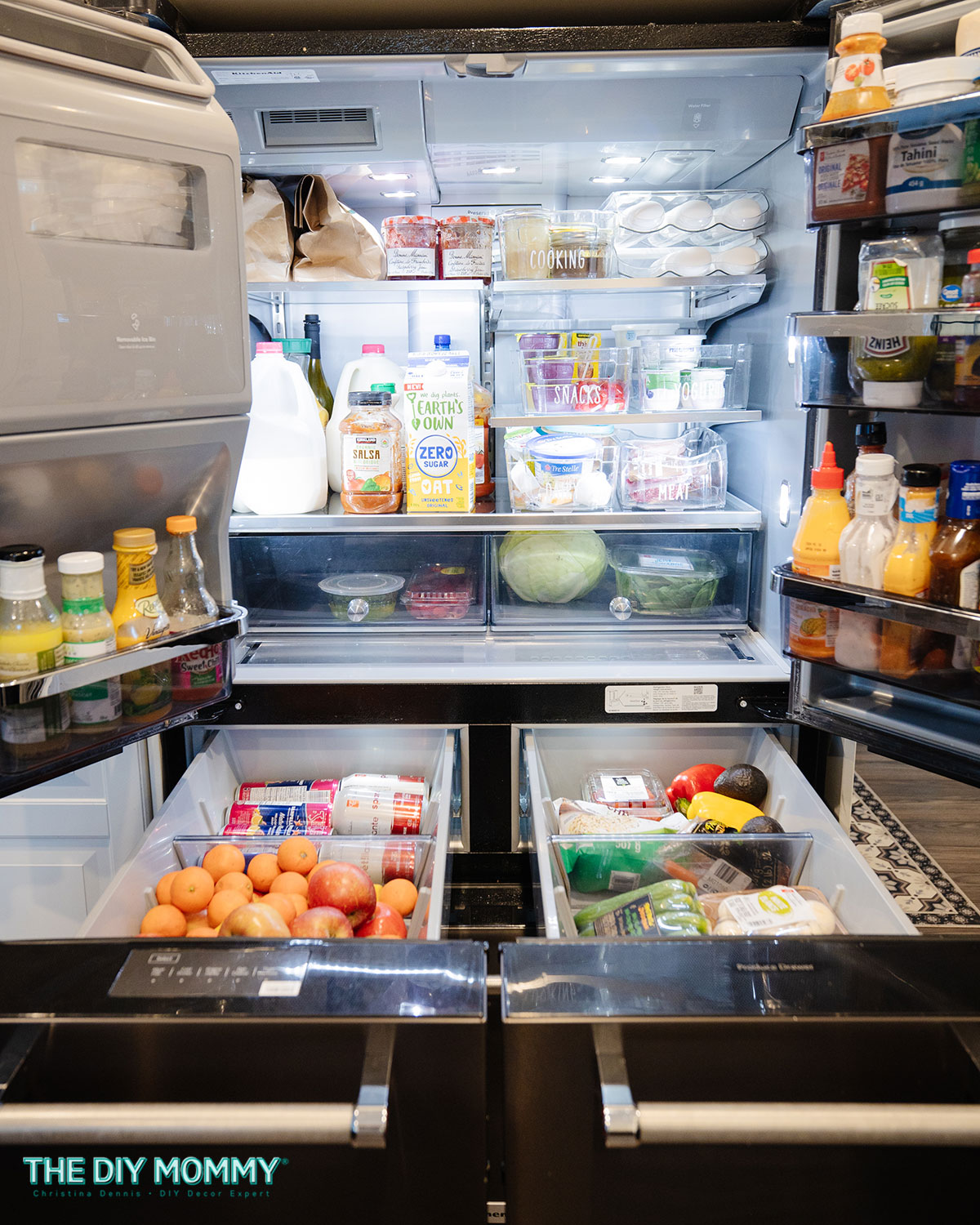
Kick off the challenge by focusing on the heart of your home: the fridge. Take everything out, give it a good cleaning, and embrace the power of clear, labelled bins for efficient organization. Make sure you dispose of any expired or rotten food, and keep things like sauces, dressings, and other condiments in the fridge doors. They don’t require as much refrigeration. For more easy to maintain tips be sure to check out my Ultimate Guide to an Organized Fridge.
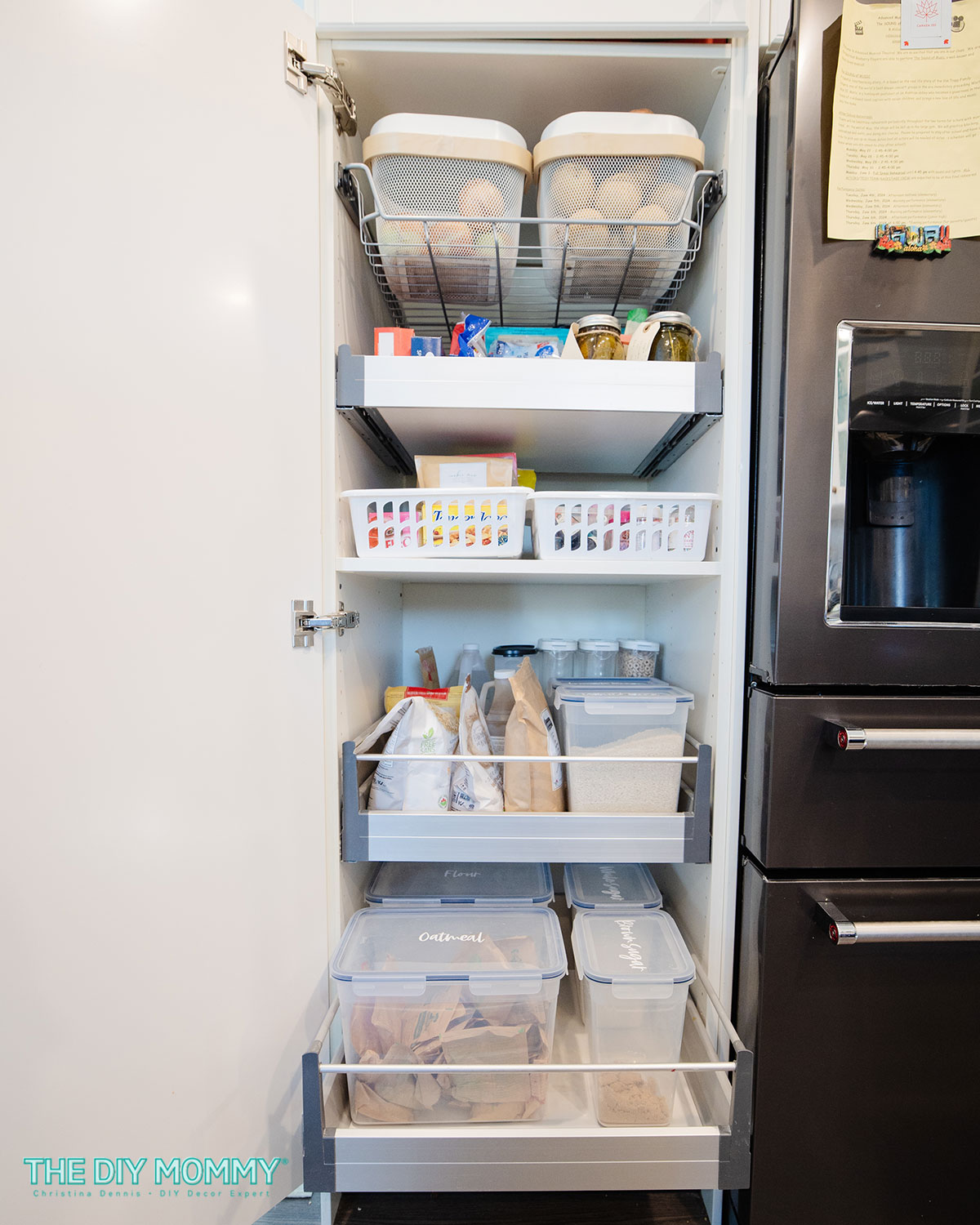
Day 2: Pantry—A Place for Everything
Next, my printable declutter checklist will have you focus on the pantry, a space that tends to get disorganized quickly. Empty it out, check for expiry dates, and invest in square bins and pull-out drawers for easy access. Even though organizing your pantry can be a pain, this small investment of time can make a big difference in your kitchen’s function.
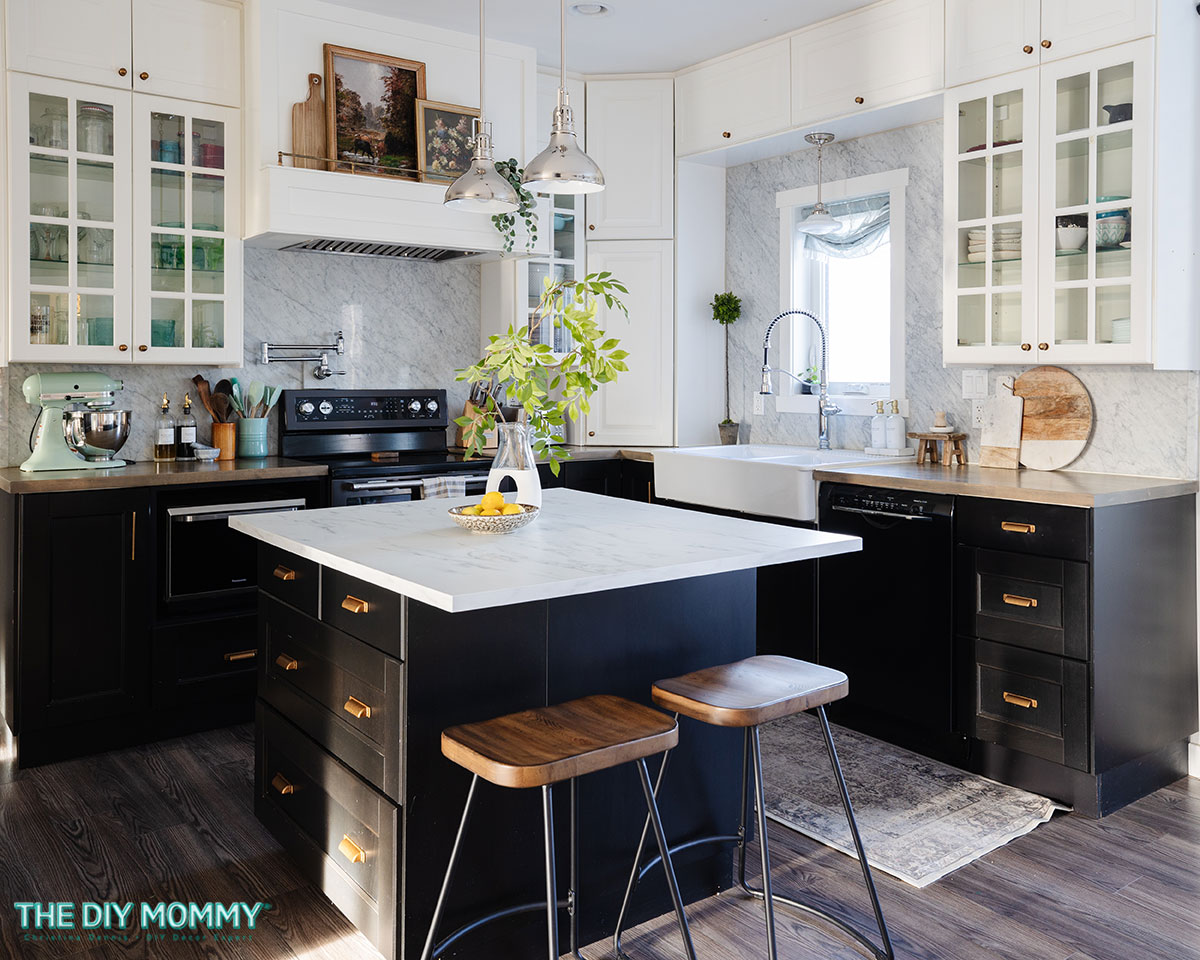
Day 3: Kitchen Counter—Declutter with Style
Let’s tackle kitchen counter clutter with a touch of style! Use pretty jars and matching kitchen accessories to create an aesthetically pleasing look for things that have to stay out in the open. Small containers corral like items and keep your counters from looking messy and cluttered.
And as much as I love decor, I think it’s best to keep things on your counters that have no function down to a minimum. Enjoy the working area that your counters provide and put decorations elsewhere!
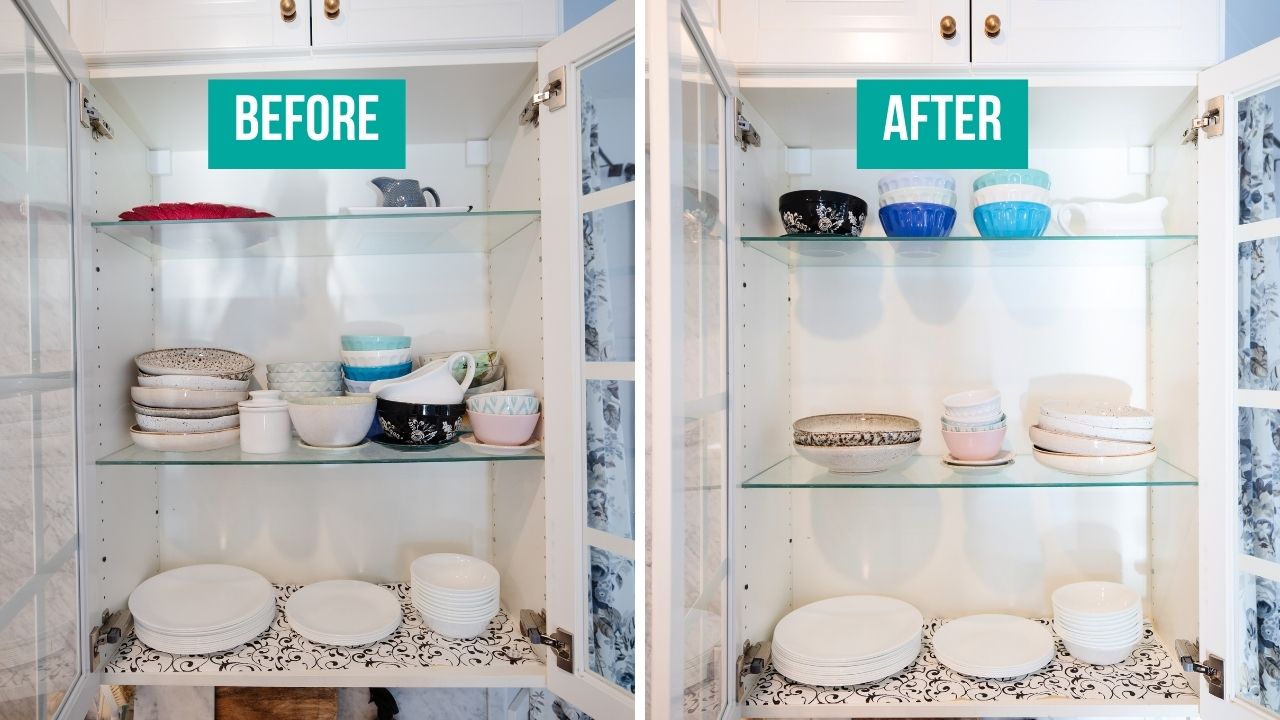
Day 4: Upper Kitchen Cabinets—Streamlined Storage
Now, let’s follow along with the printable declutter checklist and head up high to the upper kitchen cabinets. Declutter by assessing each item’s usefulness. Donate what you don’t need, and witness the transformation as your cabinets become more streamlined and organized! We all tend to keep an excess amount of dishes, cups, and mugs, so be ruthless. If you don’t use an item at least once a week, question if your family really needs it.
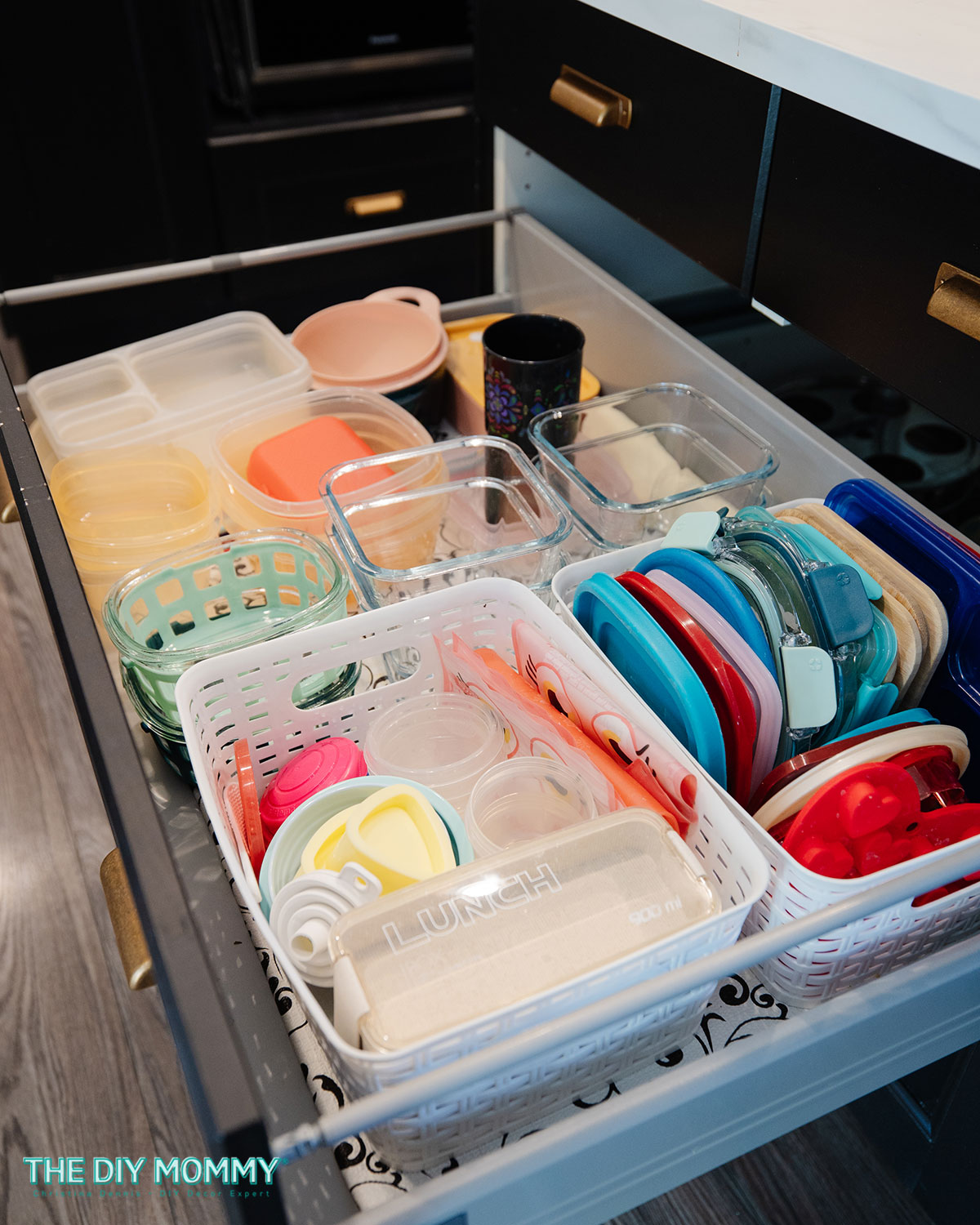
Day 5: Lower Kitchen Cabinets—Maximize Space
Focus on maximizing space in the lower cabinets. Purge unused items and use dollar store bins and baskets to store Tupperware container lids separately. Go through all of your storage containers, pots, pans, drink containers, and utensils, and discard or donate anything you haven’t used in the last six months. If containers have missing pieces, toss them.
Don’t forget that junk drawer! Take absolutely everything out, clean it, and discard items like dead batteries, pens that don’t work, expired coupons, and old electronics cords you don’t use. Consider using dollar store cutlery trays to reorganize everything in the drawer by theme and/or size.
The spice drawer can also get a little chaotic, so go through all of your spices and toss any expired ones or those that you don’t use often.
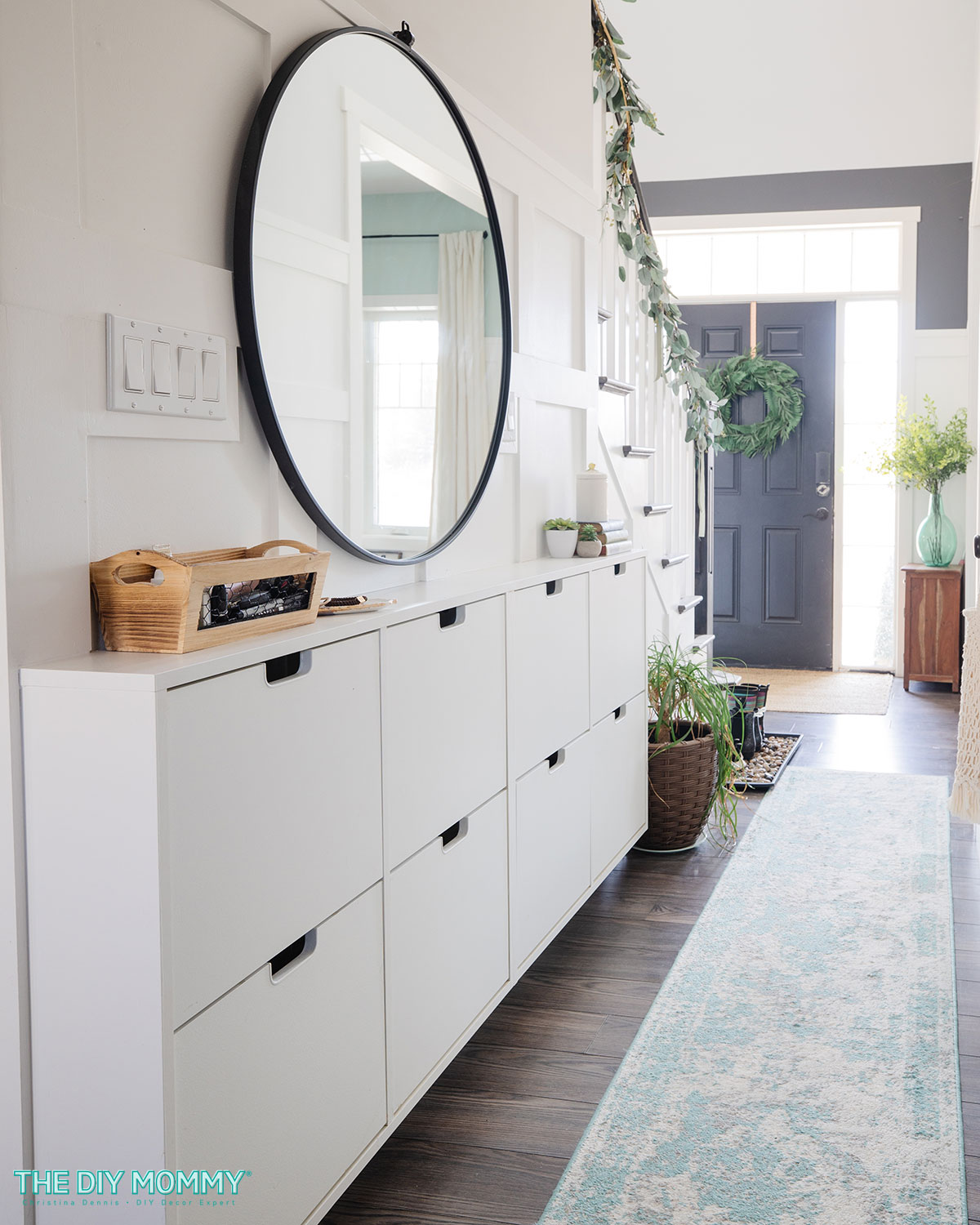
Day 6: Entryway—First Impressions Matter
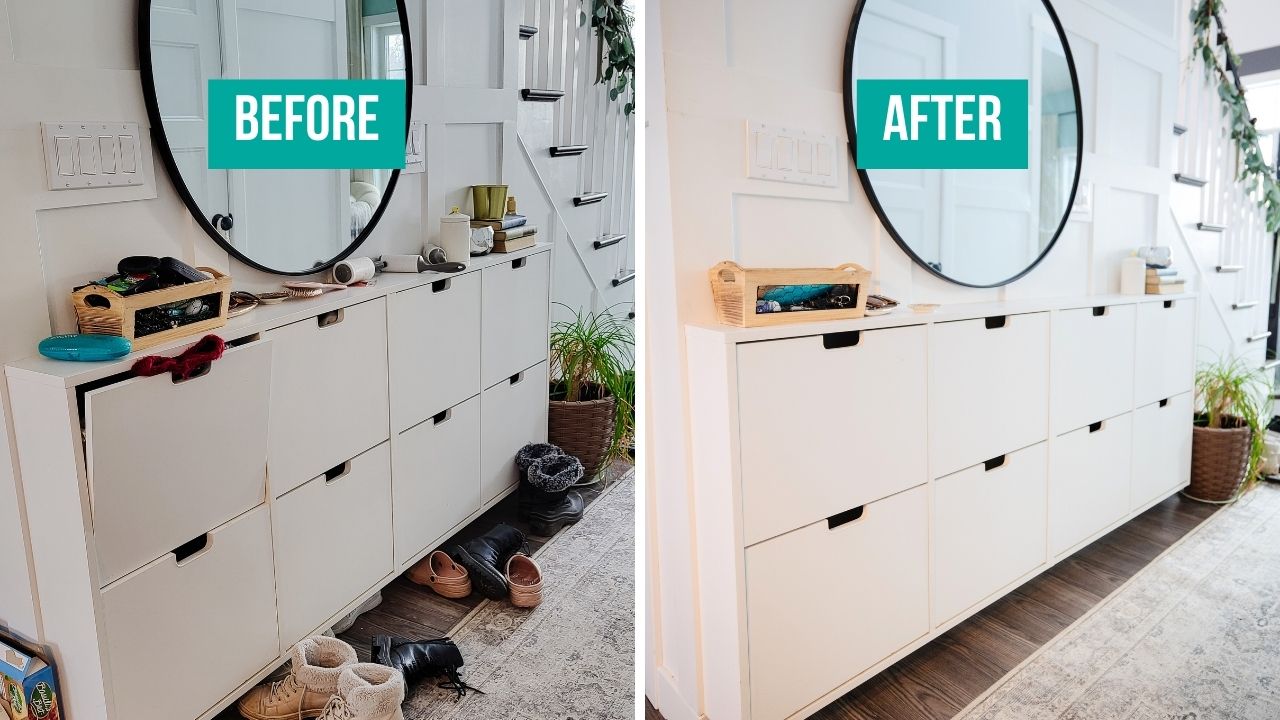
Make a lasting first impression by decluttering and organizing the entryway. A DIY shoe storage solution like the IKEA hack I have here can enhance functionality while keeping the space tidy and inviting. A small container on your entry console table corrals daily-use items like keys, chapstick, and sunglasses.
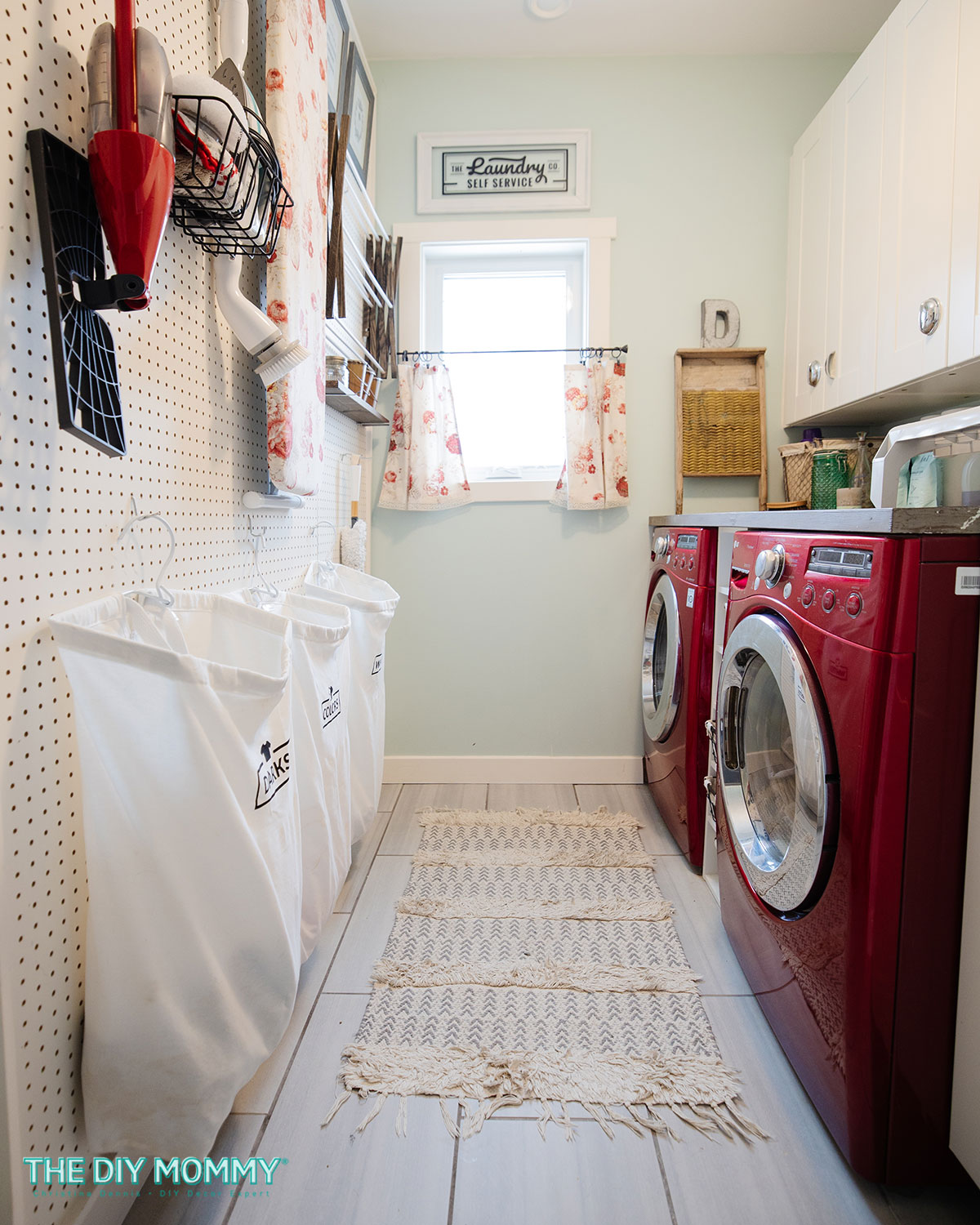
Day 7: Laundry Room—Functionality and Style
Don’t neglect the laundry room! Keep counters clutter-free with small, pretty bins and closed storage for detergents and cleaning supplies. I love incorporating a giant pegboard wall for organizing essentials in my laundry room like laundry hampers, cleaning tools, and a foldable drying rack.
Did you get it?
PSSSST! Did you download my free printable declutter checklist to help guide your organization journey? You can grab it here!
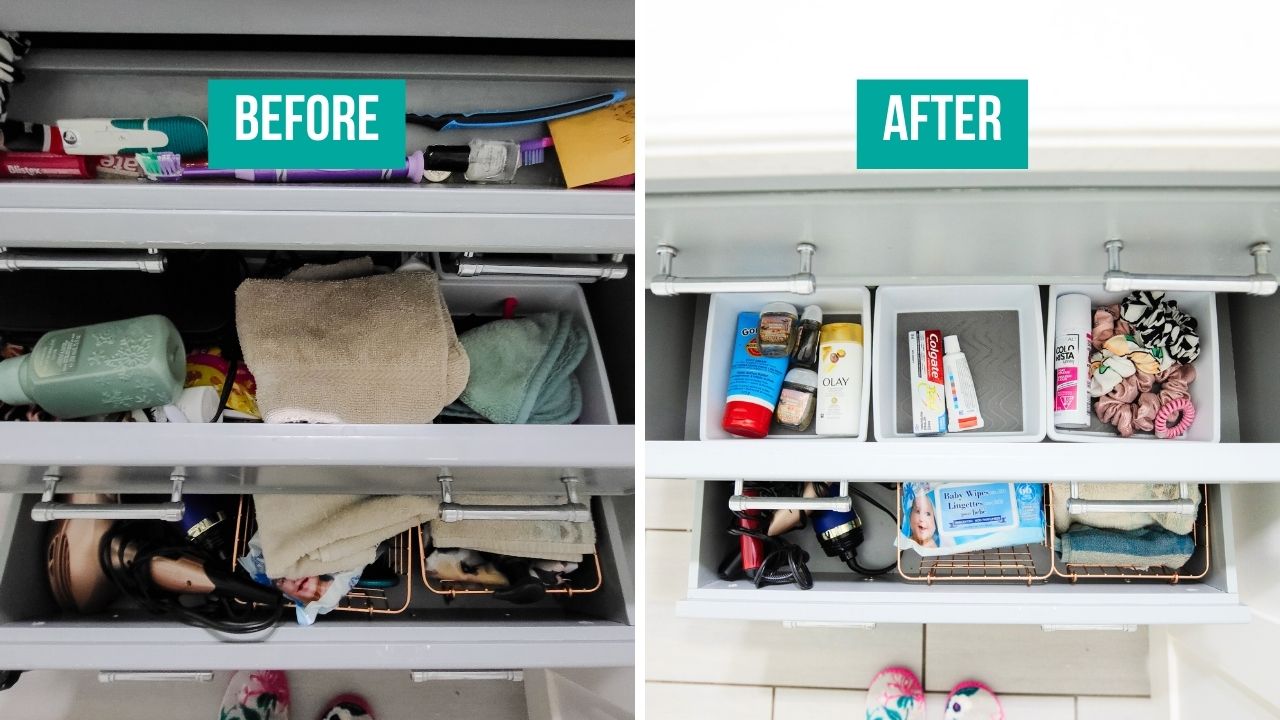
Day 8: Bathroom Drawers—Simple and Organized
Now let’s organize the often-forgotten space of bathroom drawers. Use dollar store desk containers as dividers and organize your toiletries by theme (hair care, tooth care, makeup, etc). Roll hand towels instead of folding them, and use compact baskets to keep everything organized within the drawers.
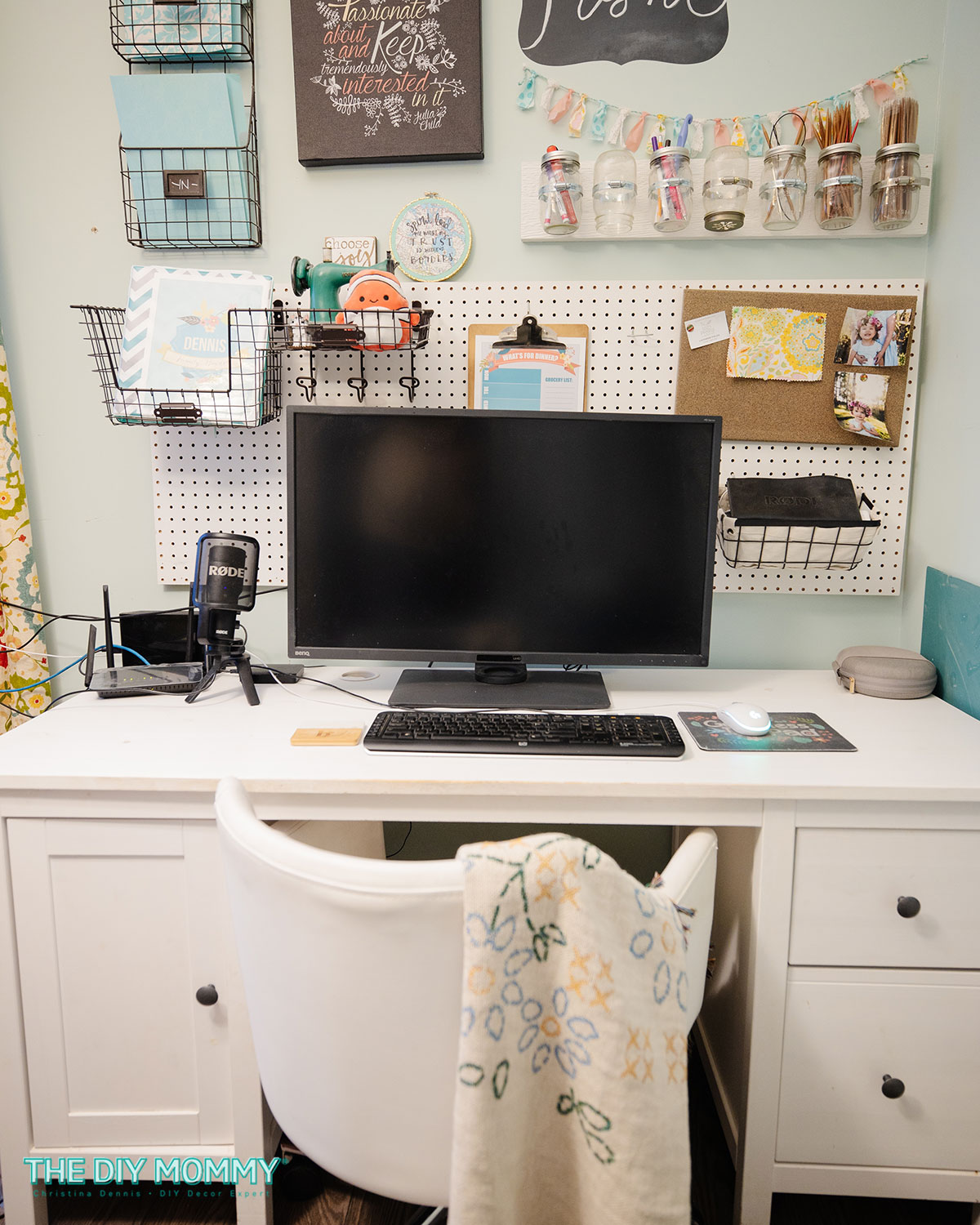
Day 9: Home Office—Conquer the Chaos
For those who work from home, it can be challenging to conquer the chaos in your home office. File away papers to get rid of that paper clutter and utilize a wall pegboard to keep things off your desk. You can even do a quick digital declutter by going through your email inbox and deleting any old messages, filing important ones, and unsubscribing from any emails that don’t serve you.
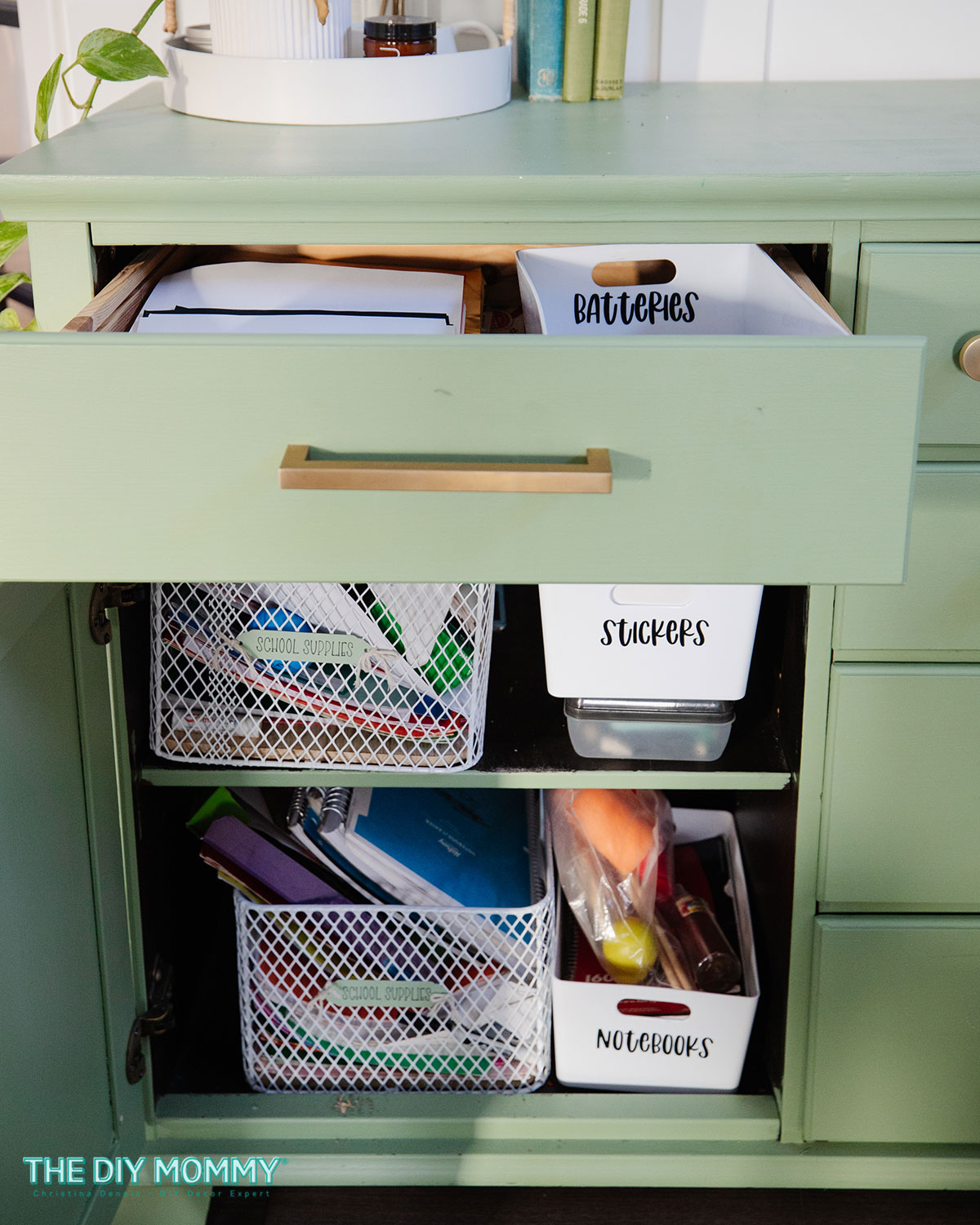
Day 10: Craft Cabinet—Unleash Creativity in an Organized Space
Let’s address the continual challenge of decluttering your kids’ craft cabinet in the living room or craft room. Implement simple labelled bins and assess your craft supplies, recycling or donating items that haven’t been used in a while. I like bins to categorize different items such as school supplies, stickers, craft kits, and notebooks. You can use inexpensive bins from the dollar store or IKEA, or even upcycle shoe boxes to keep everything organized. A moveable tote is a great way to store markers, crayons, scissors, and pencils so that your children can move them around to where they want to craft and/or do their homework.
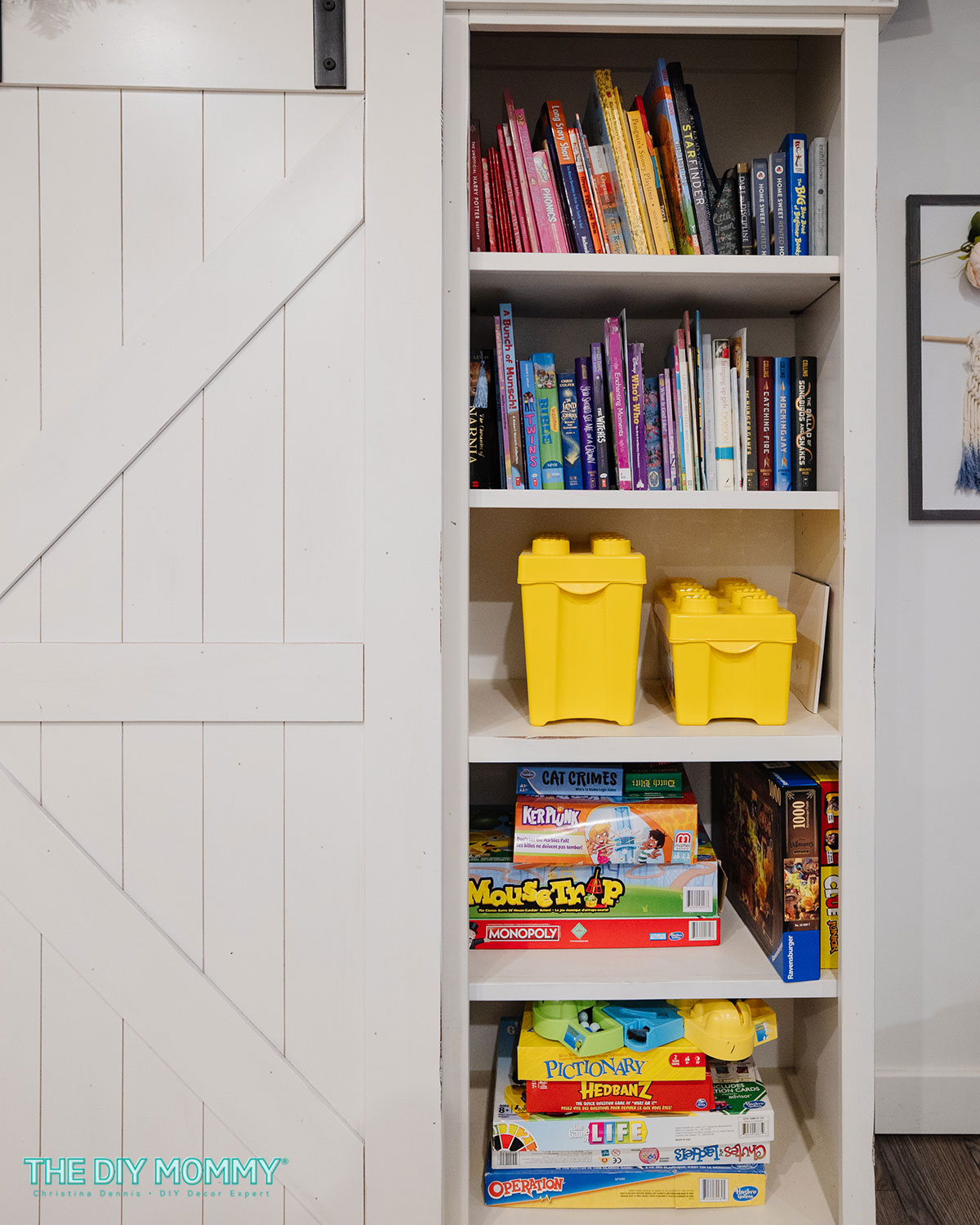
Day 11: Playroom Shelves—A Splash of Colour and Order
Next, turn your attention to the playroom and tackle the clutter on the shelves. Enlist your kids to help you go through all of the toys and books and donate anything that they haven’t used in the last 6–12 months. Use building block bins and organize books in rainbow order for a creative and visually appealing playroom. Create a designated spot for puzzles, games, and building blocks to help bring order to the space.
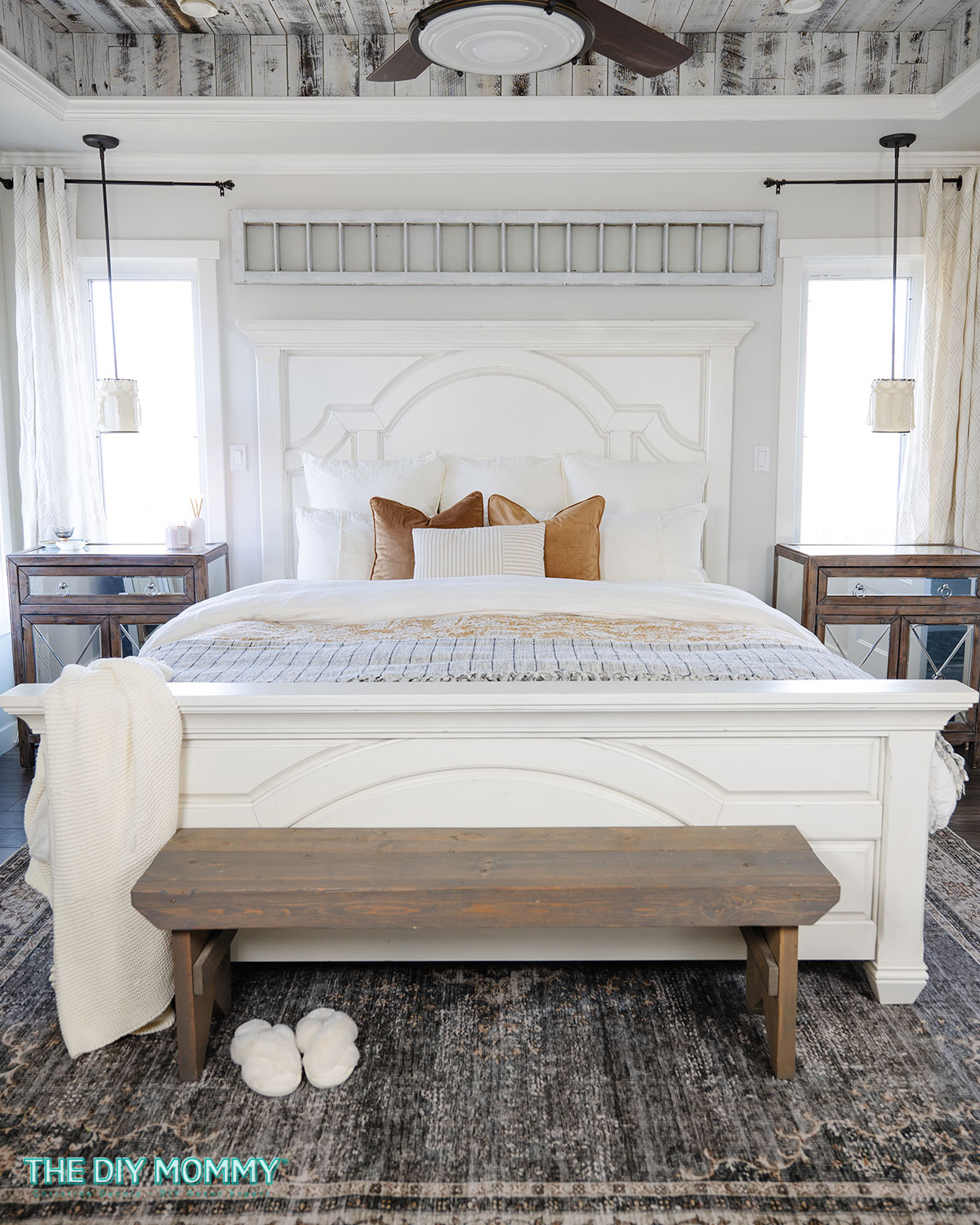
Day 12: Primary Bedroom Nightstand—Tranquility at Your Fingertips
Now, let’s shift to the primary bedroom and focus on the often troublesome nightstand. Declutter and ensure everything has its designated spot. Leave your most-used items on top (like the book you’re reading), and use pretty trays to corral smaller items such as everyday jewelry. It’s such a treat to experience the tranquility of an organized bedside space.
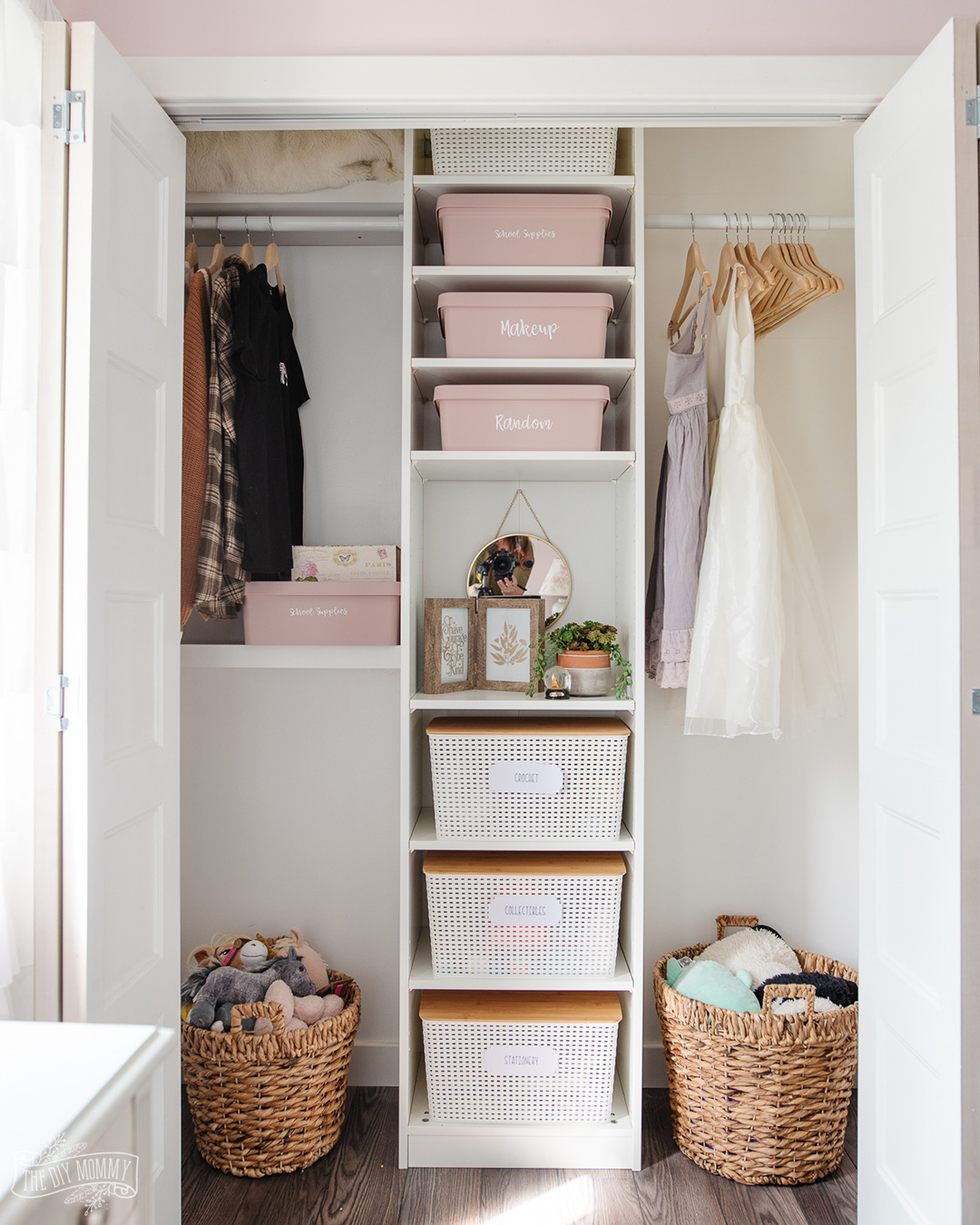
Day 13: Kids’ Bedroom Closet—Simplify Mornings with Order
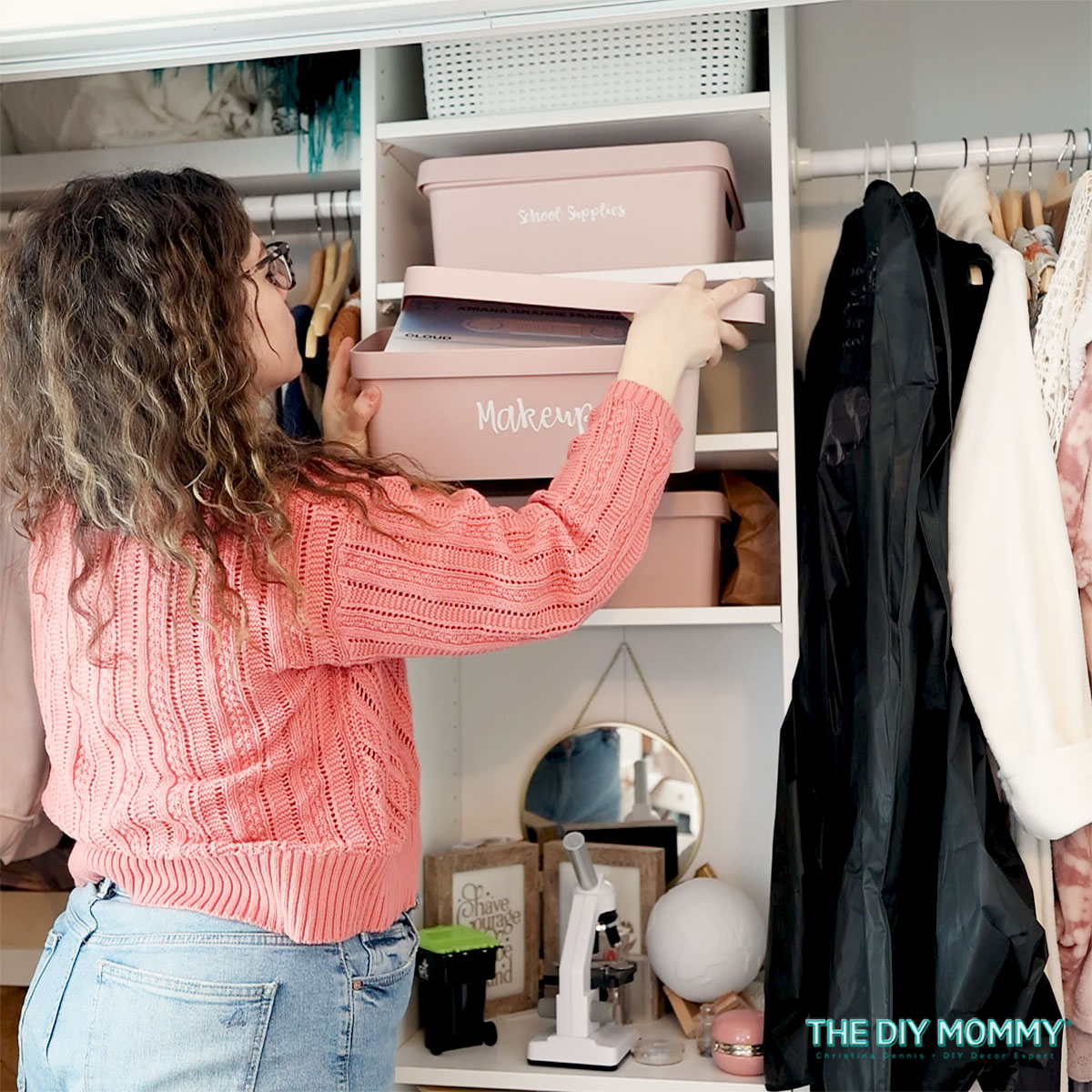
Now, let’s navigate the challenge of kids’ bedroom closets by purging unnecessary items and returning everything to its designated place. Get your kids to help! Utilize a basic closet system with shelves and bins for efficient organization. Labelling the bins will help your child know where to put items back in place. You can use bins for categories such as craft supplies, toys, makeup, and even socks & underwear.
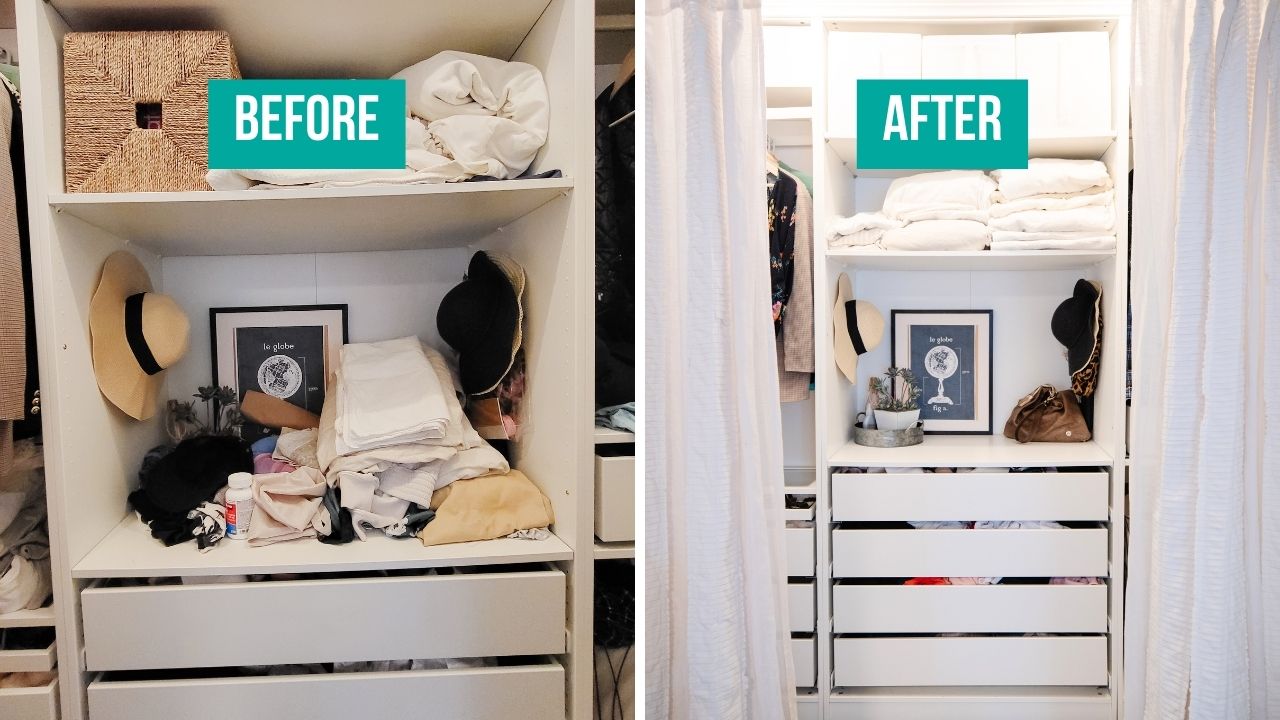
Day 14: Linen Closet—Neat and Tidy Sheets
Let’s conclude this 14-day decluttering session by conquering the linen closet. Reorganize and refold your sheets and linens, finding creative solutions for king-sized sheets (folding large sheets with the fold side out can make them look neat and tidy!). You could even use the Konmari Method to fold your linens in a way that uses space effectively. Marie Kondo has wonderful clothing and linen folding methods on her site.
Congratulations! You’ve now completed The DIY Mommy’s 14-Day Home Organization Challenge. Your efforts will not only result in a more organized home, but will also inspire a sense of accomplishment. Don’t forget to download my 14-Day printable declutter checklist to guide your home organization journey. I hope you enjoyed this challenge and found my printable declutter checklist useful. Happy organizing!
Pin Me!


2 Comments