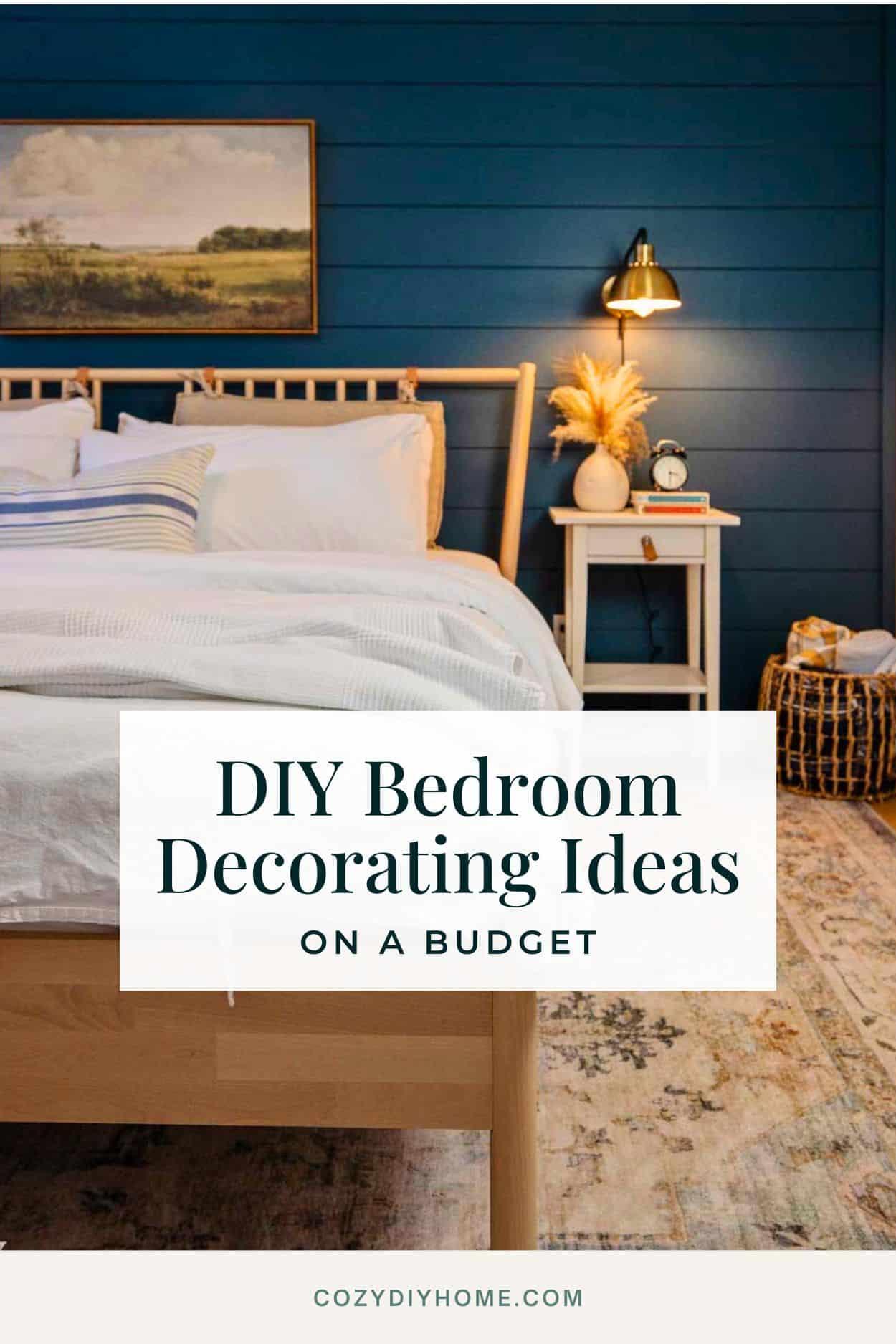
DIY Bedroom Decorating Ideas on a Budget (Designer Tricks That Actually Work)
This post may contain affiliate links · This blog generates income via ads

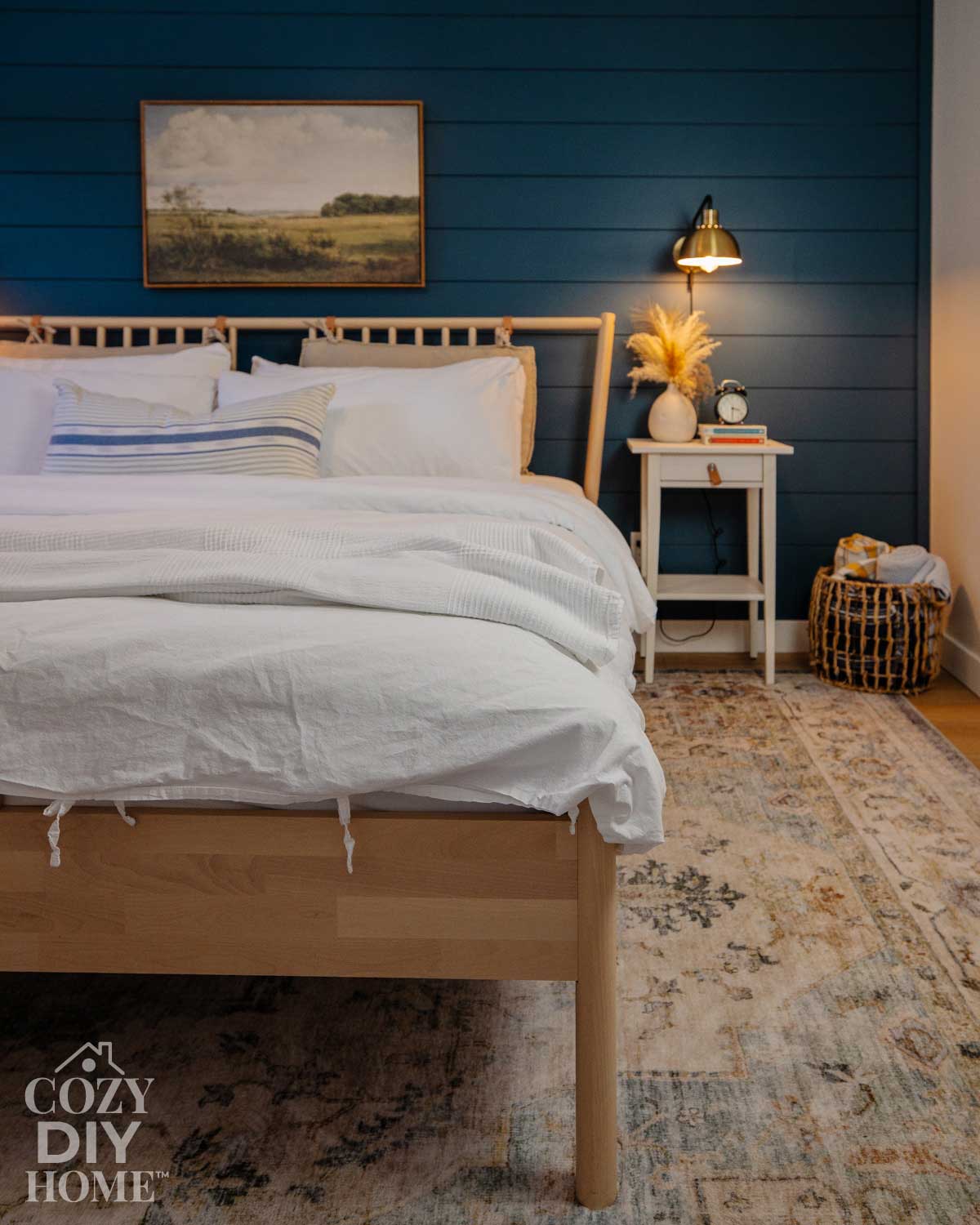
If your bedroom feels plain, cluttered, or a little unfinished, you do not need a full makeover or a big shopping trip to fix it. A few DIY bedroom decorating ideas on a budget like better lighting, softer textiles, and more intentional styling can make a bedroom look warmer, more polished, and a whole lot cozier!
A well-designed bedroom matters because it is not just where you sleep. It is where you start and end your day. Sleep experts also recommend a bedroom that is dark, cool, and quiet, so decorating it well can help it feel better and function better too.
In this post, I’m sharing easy DIY bedroom decorating ideas on a budget that actually make a difference, plus the designer tricks that help a basic room feel layered, cozy, and pulled together!
Quick Overview
Time: A weekend, or one afternoon for a few small updates
Cost: Around $20 to $150 depending on what you already own
Skill level: Beginner
Tools: Screwdriver, scissors, measuring tape, hammer, picture-hanging strips, drill for some projects
Materials List
Materials used in these ideas will vary, but here are the most common budget-friendly supplies:
- Throw pillows or pillow covers
- Cozy blanket or throw
- Curtains or curtain panels
- Curtain rings or clips
- Paint
- Peel-and-stick wallpaper
- Lamps or plug-in sconces
- LED light bulbs
- Picture frames
- Baskets or storage bins
- Rug
- Nightstands or small side tables
- Decorative tray
- Candles or flameless candles
- Art prints
- Mirrors
- Command strips or wall hooks
You can find most of these at places like Walmart, IKEA, thrift stores, Facebook Marketplace, Dollar Tree, HomeSense, or Amazon.
Step-by-Step Tutorial

Step 1: Start by clearing visual clutter
Before you buy anything, remove anything that makes the room feel busy or cramped. This might be extra decor, clothes on a chair, too many small items on surfaces, or bedding that feels mismatched.
Why this matters: Even a pretty room can feel cheap when it looks crowded. A cleaner space instantly feels calmer and more intentional.
Tips to avoid mistakes:
- Do not try to style around clutter
- Keep nightstands simple
- Use a basket to hold extra blankets, cords, or random items
Step 2: Upgrade the bed first
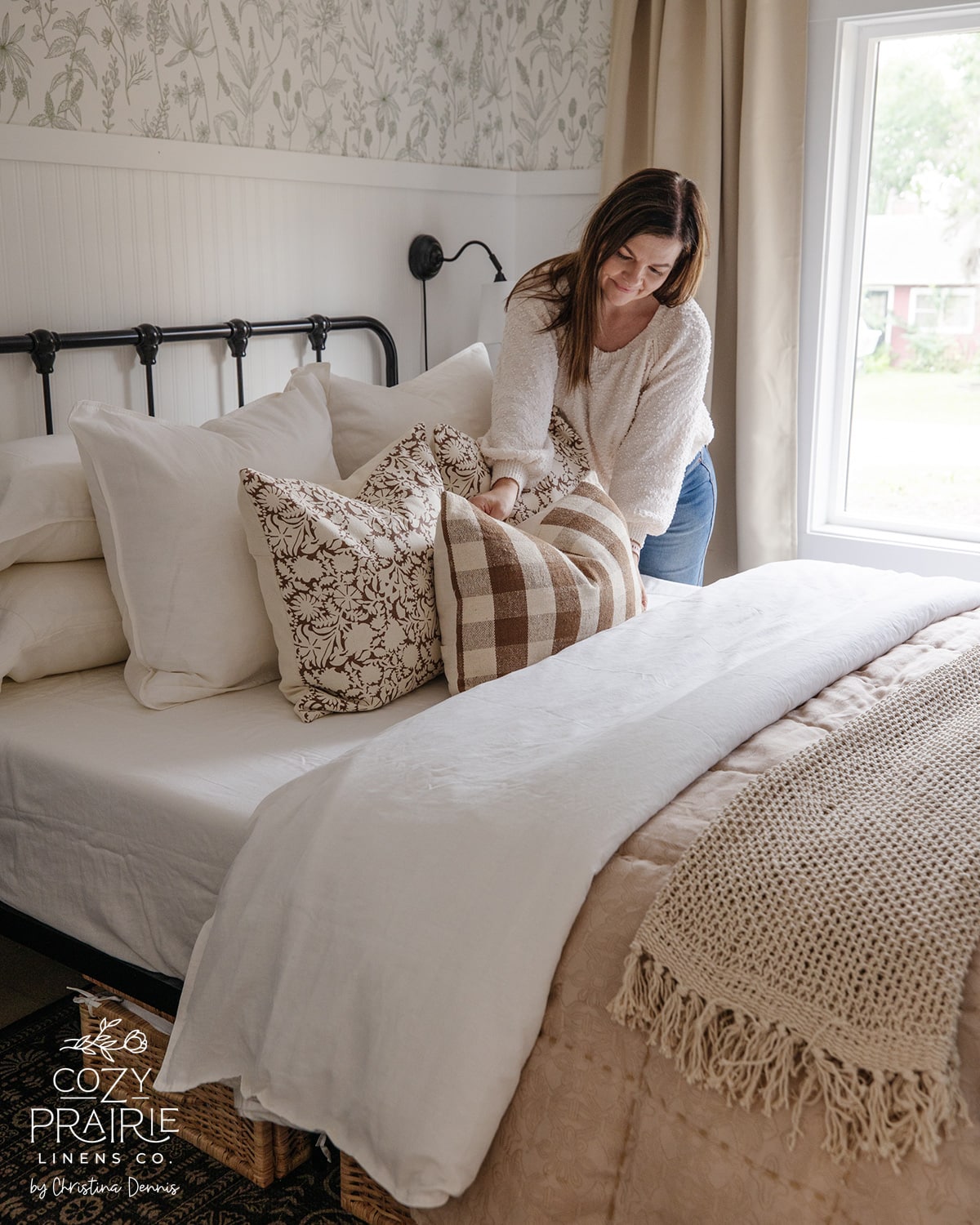
Your bed is the biggest thing in the room, so it has the biggest impact. Start with fresh bedding, add a fluffy duvet or comforter, and layer in pillows and a throw blanket.
Why this matters: Designers often make the bed the focal point. When the bed looks full and cozy, the whole room looks better.
Tips to avoid mistakes:
- Stick to 2 or 3 main colors
- Use larger pillows in back and smaller ones in front
- Choose bedding with texture, not too many patterns
Step 3: Hang curtains higher and wider
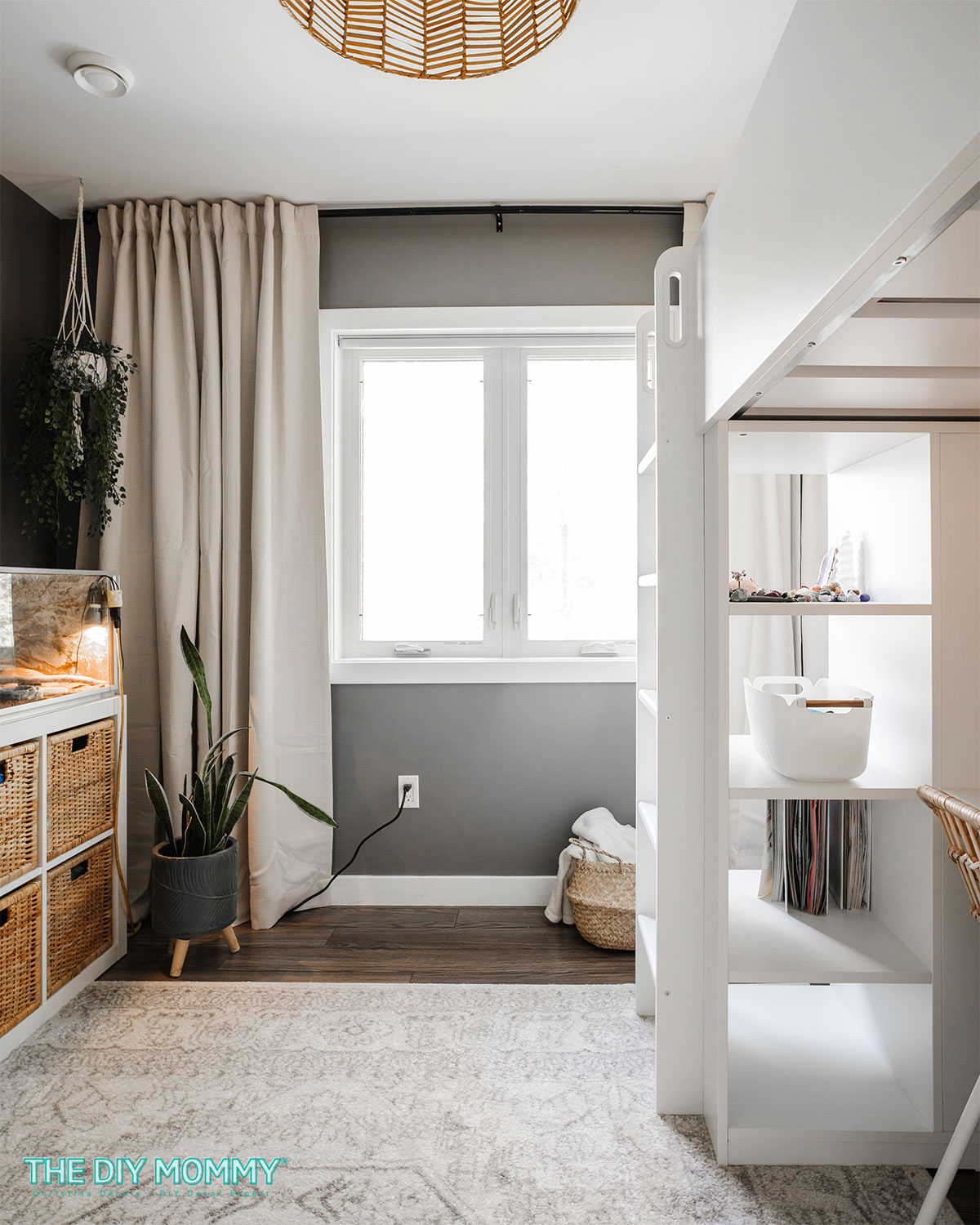
This is one of the best designer tricks for making a bedroom look more expensive! Mount curtain rods closer to the ceiling and extend them wider than the window frame.
Why this matters: It makes windows look bigger and ceilings look taller. That simple shift can totally change the room.
Tips to avoid mistakes:
- Avoid hanging rods right on top of the window frame
- Make sure curtains are long enough to reach the floor
- Iron or steam panels so they hang nicely

Step 4: Layer your lighting
Most bedrooms look flat because they rely on one overhead light. Add at least one more light source, like bedside lamps, a plug-in wall sconce, or soft accent lighting.
Why this matters: Layered light makes a room feel warm and custom instead of harsh and basic. It also helps your bedroom feel more restful at night. Sleep experts recommend a dark bedroom for better sleep, and softer lighting in the evening can support that goal.
Tips to avoid mistakes:
- Use warm bulbs instead of cool blue-toned bulbs
- Put lamps on both sides of the bed when possible
- Choose bulbs with softer brightness for bedtime lighting
A practical bonus: the U.S. Department of Energy says residential LEDs use at least 75% less energy and last up to 25 times longer than incandescent bulbs, so this is one update that can look better and save money over time.
Step 5: Add one simple DIY wall treatment
A wall treatment can make a big impact without redoing the whole room. Try one of these:
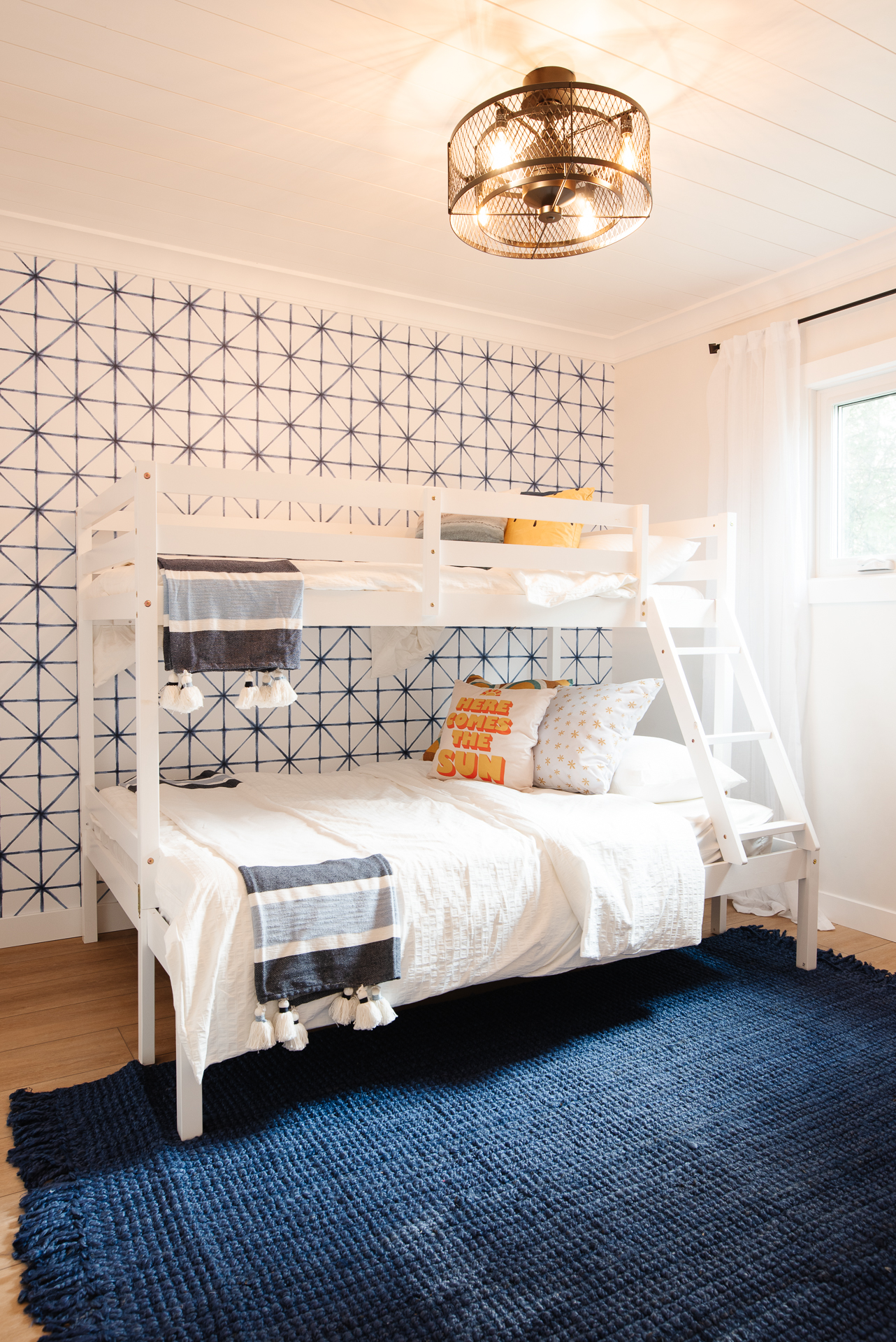
- Paint an accent wall
- Add peel-and-stick wallpaper behind the bed
- Create a simple picture-frame molding look
- Hang a large thrifted art piece
- Make a small gallery wall
Why this matters: Bedrooms often feel unfinished because the walls are empty. Adding interest gives the room personality and depth.
Tips to avoid mistakes:
- Choose one focal wall instead of doing too much
- Use painter’s tape to plan layouts first
- Keep art large enough for the space

Step 6: Bring in texture
Texture is what makes a room feel cozy instead of flat. You do not need expensive decor for this. Mix fabrics and finishes you already have or can find secondhand.
Try adding:
- A chunky knit throw
- Linen-look curtains
- A woven basket
- A small wood stool
- A soft area rug
- Velvet or cotton pillow covers
Why this matters: Designer rooms usually feel layered because they mix textures, not because they use expensive items.
Tips to avoid mistakes:
- Mix soft and natural materials
- Keep the color palette simple so texture stands out
- Do not overload the room with tiny decor pieces
Step 7: Style surfaces in small groups
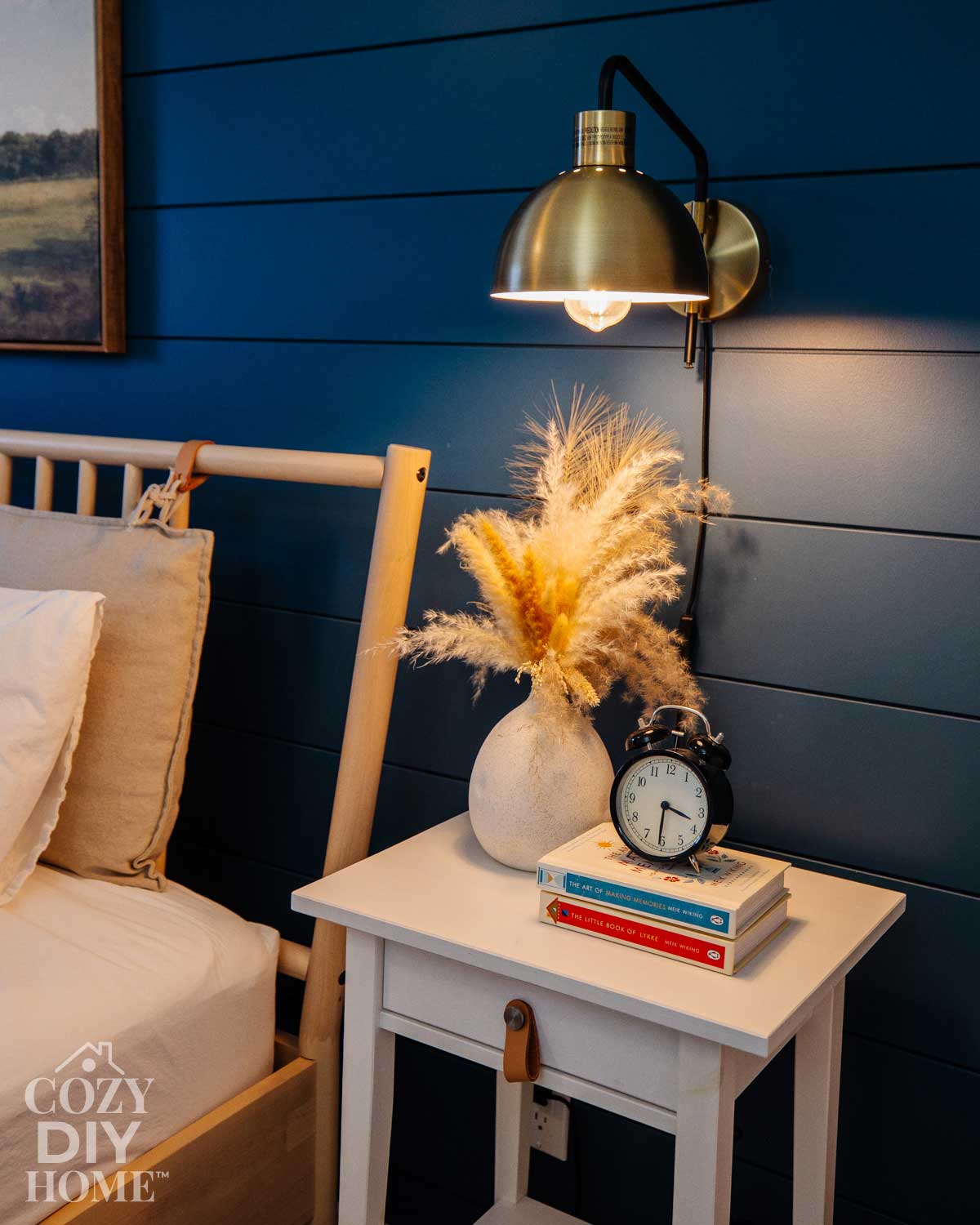
Now style your dresser, nightstand, or shelf with a few grouped items instead of scattering decor everywhere.
A simple formula:
- something meaningful
- something useful
- a source of light (or add another “useful” or “meaningful” element if you have a wall pendant/sconce)
Example:
- a lamp
- a small tray with your eyeglasses
- a candle
- a framed print
- a small vase or plant
- a stack of books
- a clock
Why this matters: Grouped decor looks more thoughtful and less random.
Tips to avoid mistakes:
- Leave some empty space
- Use trays to make small items feel organized
- Stick with odd-number groupings when possible
Step 8: Make the room sleep-friendly too
A beautiful bedroom should also be comfortable to rest in. The National Sleep Foundation recommends a room that is dark, cool, and quiet, with a temperature around 16 to 19 degrees Celcius (60 to 67 degrees Fahrenheit). The Sleep Foundation also notes that many experts place ideal sleep temperature around 65 degrees.
Budget-friendly ways to do that:
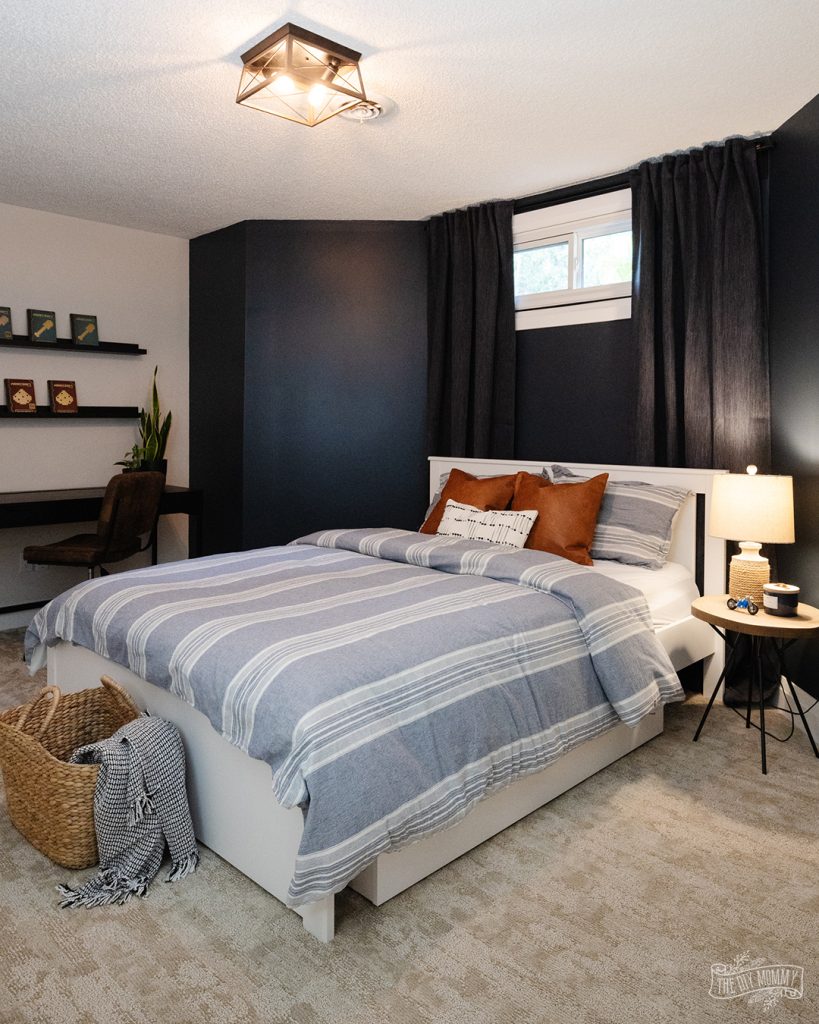
- Add blackout curtains
- Use a fan for airflow and soft noise
- Switch to warmer bedside lighting
- Keep tech clutter to a minimum
- Move the bed away from noisy windows when possible
Why this matters: A bedroom that looks good but does not feel restful misses the point.
Tips to avoid mistakes:
- Do not overdecorate your sleep space
- Keep your nightstand practical
- Prioritize comfort over trends
Tips for the Best Results
Here are the budget decorating ideas that usually make the biggest difference fastest:
- Shop your house first. Move lamps, baskets, art, or throws from other rooms before buying new things.
- Use pillow covers instead of new pillows. This saves money and takes up less storage space.
- Thrift wood furniture whenever possible. A small nightstand or bench often looks more expensive than flimsy flat-pack pieces.
- Choose larger decor over lots of tiny decor. One big mirror or large art print has more impact than ten small items.
- Repeat colors around the room. This makes everything feel connected.
- Hide cords when you can. It is a small detail, but it makes a room feel neater fast.
- Mix budget pieces with one standout item. That could be a lamp, mirror, headboard, or rug.
Styling or Usage Ideas
Once your bedroom is decorated, here are a few cozy ways to style it:
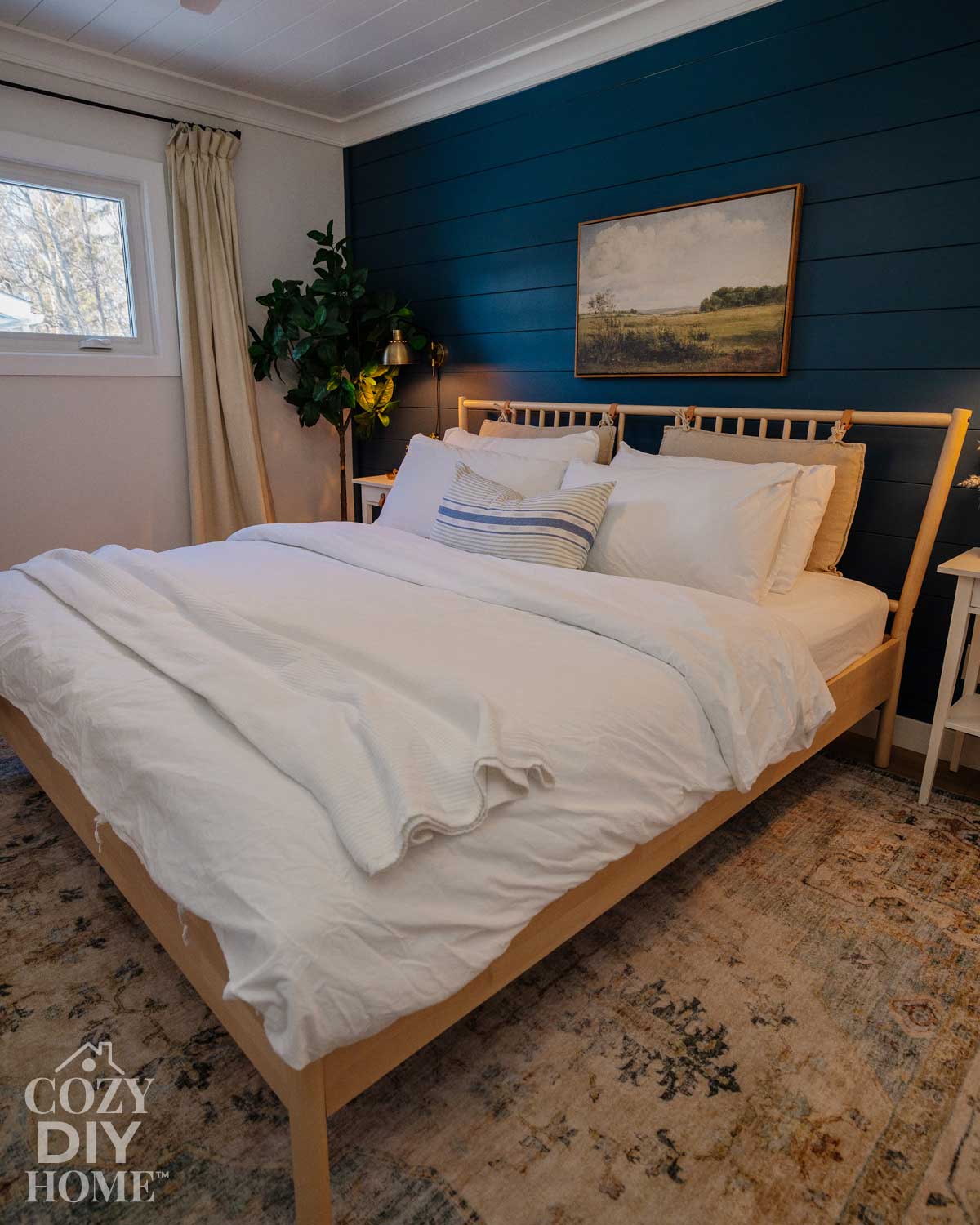
- Add a folded throw at the end of the bed for a soft hotel-style look
- Place a candle and a small book stack on the nightstand
- Use a wood tray on the dresser for perfume, jewelry, or lotion
- Add one plant or faux stem arrangement for life and color
- Swap in seasonal pillow covers to refresh the room without redoing everything
- Style a bench or basket at the foot of the bed for both storage and texture
These little details help the room feel lived-in, calm, and personal.
Frequently Asked Questions
Yes. Start with bedding, curtains, lighting, and wall decor. Those updates usually make a bigger impact than people expect.
Hang curtains higher, use better bedding, declutter surfaces, and add warm layered lighting. Those four changes go a long way.
No. Matching furniture can work, but mixed pieces often feel more relaxed and custom, especially when tied together with colour or finish.
Soft neutrals, warm whites, muted greens, dusty blues, and earthy tones all work well for a cozy bedroom look.
Yes, especially if your room gets a lot of streetlight or early morning sun. They can help your room feel more restful by blocking light, which sleep experts recommend for better sleep.
Related Projects
If you enjoyed these DIY bedroom decorating ideas on a budget, you might also like:
- How to Make Store-Bought Curtains Look Custom (Without Spending a Fortune)
- Cozy Bedroom Decor Ideas That Feel Like a Warm Hug
- How to Knit a Chunky Blanket for Beginners: No Needles Required!
- 10 Interior Design Mistakes That Make Your Home Look Cheap (And How to Fix Them)
- DIY Cozy Home Decor Projects Using Upcycled Materials
You do not need a designer budget to create a bedroom that feels cozy, stylish, and pulled together. A few smart updates like better bedding, higher curtains, layered lighting, texture, and simple styling can completely change how the room feels.
Start with one or two ideas, use what you already have, and build from there. Little changes really do add up. And when they make your bedroom feel calmer and more comfortable, that is always money well spent!
If you try any of these bedroom decorating ideas, I’d love to hear which one made the biggest difference in your space! Tag me on social: @cozydiyhome
Pin Me: