
The Ultimate Guide for Kitchen Spacing Rules & Distances
This post may contain affiliate links · This blog generates income via ads

Designing a kitchen is like a well-orchestrated symphony, where every element plays an important role in creating a harmonious and functional space. From how far the kitchen island should be from the cabinets to the ideal placement of pendant lights, there are essential spacing rules and distances to consider. Let’s talk about the basic kitchen spacing rules & standard measurements of kitchen design, ensuring your kitchen is both beautiful and practical.

Over the last couple of decades, my contractor husband and I have designed, installed and/or renovated several kitchens. We have learned SO much about the standard dimensions and spacings for all of the elements that need to go into a kitchen to make it both beautiful and most of all: functional. Before renovating your own kitchen, I recommend becoming familiar with these standard kitchen spacing rules & distances so that you don’t make any costly mistakes. From sharing how far the kitchen island should be from the cabinets to how low to hang your pendant lights, I’m sharing all the measurements, tips & tricks you’ll need to know for your kitchen renovation here!

How Far Should a Kitchen Island Be From the Cabinets
One of the most common questions when designing a kitchen is, “How far should a kitchen island be from the cabinets?” It’s important to ensure that there’s enough room for smooth movement and functionality. The recommended distance between the island and the cabinets or walls is a minimum of 42 inches for a single-cook kitchen and 48 inches for a multi-cook kitchen. This space allows for comfortable movement and access to drawers and appliances without feeling cramped. Adequate spacing ensures you can open cabinet doors and drawers fully, without any obstructions, making your kitchen tasks a breeze.

Sizing Your Kitchen Island
When it comes to the size of a kitchen island, there are a few factors to consider, including the size of your kitchen and how you plan to use the island. Generally, a kitchen island should be at least 4 feet long and 2 feet deep. However, if your kitchen is smaller, you might opt for a more compact island to avoid overcrowding the space. You could also consider island alternatives like a rolling kitchen cart or an antique dresser.
For those with ample square footage in their kitchen area, a large island can serve multiple purposes, from extra storage and meal prep space to a casual dining area. A width of 3 to 4 feet is ideal for a functional kitchen island, providing enough space for a sink, cooktop, or seating area without sacrificing walkways and movement around the kitchen. Lengths for larger islands can vary anywhere from 6 feet to 8 feet and beyond! How far should a kitchen island be from the cabinets if it’s oversized like this? Then answer is still 42 – 48 inches!

Positioning the Dishwasher Near the Sink
A well-placed dishwasher can significantly improve your kitchen’s efficiency. The best rule of thumb is to place the dishwasher within arm’s reach of the kitchen sink, typically 24 inches to 36 inches away. This proximity allows for easy transfer of dishes from the sink to the dishwasher, making your post-meal cleanup much more manageable. Additionally, placing the dishwasher close to the sink ensures that plumbing lines can be efficiently shared, which can be a cost-effective solution during installation. Creating this “dish washing zone” is a must in any well-designed kitchen!
Another important consideration for this zone is to ensure there’s enough prep area on either side of the kitchen sink. It’s ideal to have at least 24 inches of countertop work area on either side for any food prep or dish drying needs. (The same goes for counter space around a stove!)

Hanging Pendant Lights Over the Kitchen Island
Lighting is an essential element in kitchen design, and pendant lights over the kitchen island not only add style but also provide crucial task lighting. The key question here is, “How low should kitchen island pendant lights hang?” The general rule is to hang pendant lights 30 to 36 inches above the countertop of the kitchen island. This height provides ample lighting for food preparation and other tasks while also ensuring that the lights aren’t in your way or obstructing your view.
If your kitchen ceiling is particularly high, you may need to adjust this height slightly. For ceilings over 9 feet, consider adding an extra 3 inches of height for every foot over 9 feet to maintain balanced proportions.

Other Frequently Asked Questions About Kitchen Design
How Much Space Should Be Allocated for a Kitchen Work Triangle?
The kitchen work triangle is a design principle that connects the sink, stove, and refrigerator, forming a triangle shape. This layout aims to maximize efficiency by minimizing the distance between these key areas. Each leg of the kitchen triangle should be between 4 and 9 feet, and the sum of all three sides should not exceed 26 feet. This spacing ensures that you can move efficiently between these critical points without having to travel too far. My preference is to have the stove in between the fridge & sink, but as long as they’re all accessible to one another, you can play with the optimal arrangement for you & your family.
What Is the Best Countertop Height?
Standard countertop height is typically 36 inches from the floor. This height is considered ergonomic for most people, providing a comfortable workspace for food preparation. If you’re particularly tall or short, you might consider customizing your countertop height to better suit your needs. For kitchen islands that serve as dining areas, a height of 42 inches is common for higher kitchen island seating with bar stools. You can even create a custom island that has a bar-height area and a counter-height area.
How Much Clearance Do You Need for Kitchen Appliance Doors?
When planning your kitchen layout, it’s essential to consider the clearance space needed for appliance doors. For refrigerators, ensure there is at least 36 inches of clearance space in front to allow the door to open fully and provide access to drawers and shelves. Oven doors and dishwasher doors also need adequate clearance. A good rule of thumb is to allow at least 48 inches of space in front of these appliances to ensure you can comfortably open and load/unload them.

How High Should Upper Cabinets Be Mounted?
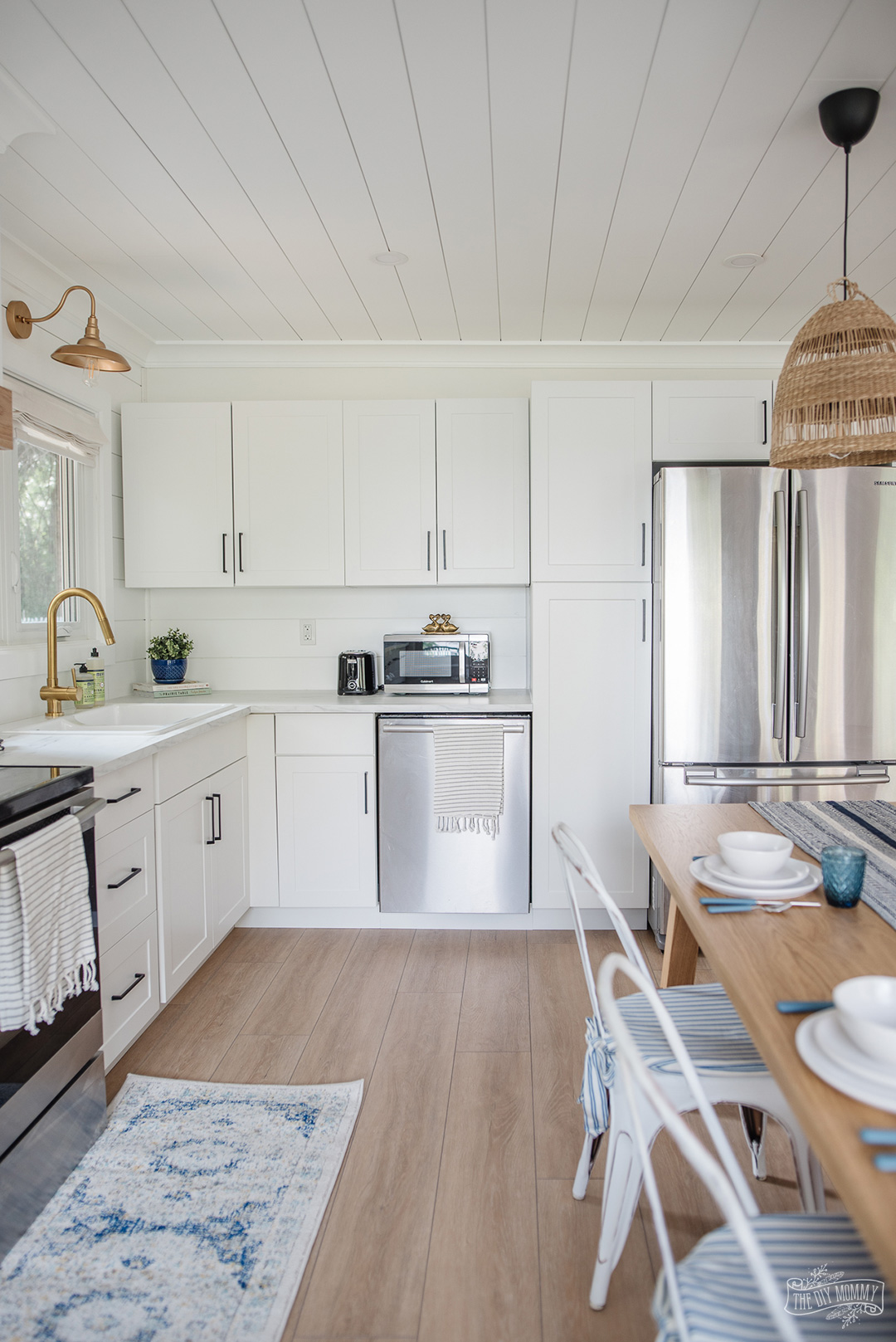
Upper cabinets in the kitchen should be mounted so the bottom edge is about 54 inches above the floor. This height ensures that the cabinets are accessible while providing ample space between the kitchen counter and the cabinets, typically around 18 inches. This spacing allows for small appliances and other items to fit comfortably on the countertop without feeling cramped.
You can play with this measurement a little bit depending on the design of your upper cabinets. However, keep in mind that any distance less than 18 inches between your countertop and upper cabinets can affect the function & comfort of your counter space.
What Is the Ideal Depth for Kitchen Countertops?
The standard depth for kitchen countertops is 24-25 1/2 inches. This depth provides enough workspace for food preparation and cooking tasks while ensuring that items on the counter are easily reachable. For kitchen islands, you might opt for a deeper countertop, around 36 inches, to accommodate seating and additional workspace.
When sourcing or ordering countertop, don’t forget that the standard countertop overhang over the base cupboards is usually 1 to 1 1/2 inches.

How Far Should a Range Hood Extend Over the Cooktop?
A range hood should extend at least 3 inches beyond the cooktop on each side, providing effective coverage and ventilation. This typically means a range hood that is at least 30 inches wide for a standard 24-inch cooktop. The height of the range hood installation also matters; it should be installed 24 to 30 inches above an electric cooktop and 30 to 36 inches above a gas cooktop to ensure optimal performance.
Designing a beautiful & practical kitchen space involves careful consideration of various spacing rules and distances. From how far the kitchen island is from the cabinets to the height of pendant lights, each decision impacts the overall flow and usability of your kitchen. By following these recommendations you can create a kitchen that not only meets your needs but also becomes a welcoming and efficient hub of your home.
Remember, while these guidelines provide a solid foundation, personal preferences and specific needs should always guide your final design choices. Happy designing!
PIN ME:


